How Many Hair Grafts Do I Need? A Complete Hair Transplant Guide
If you're considering a hair transplant, one of the first…

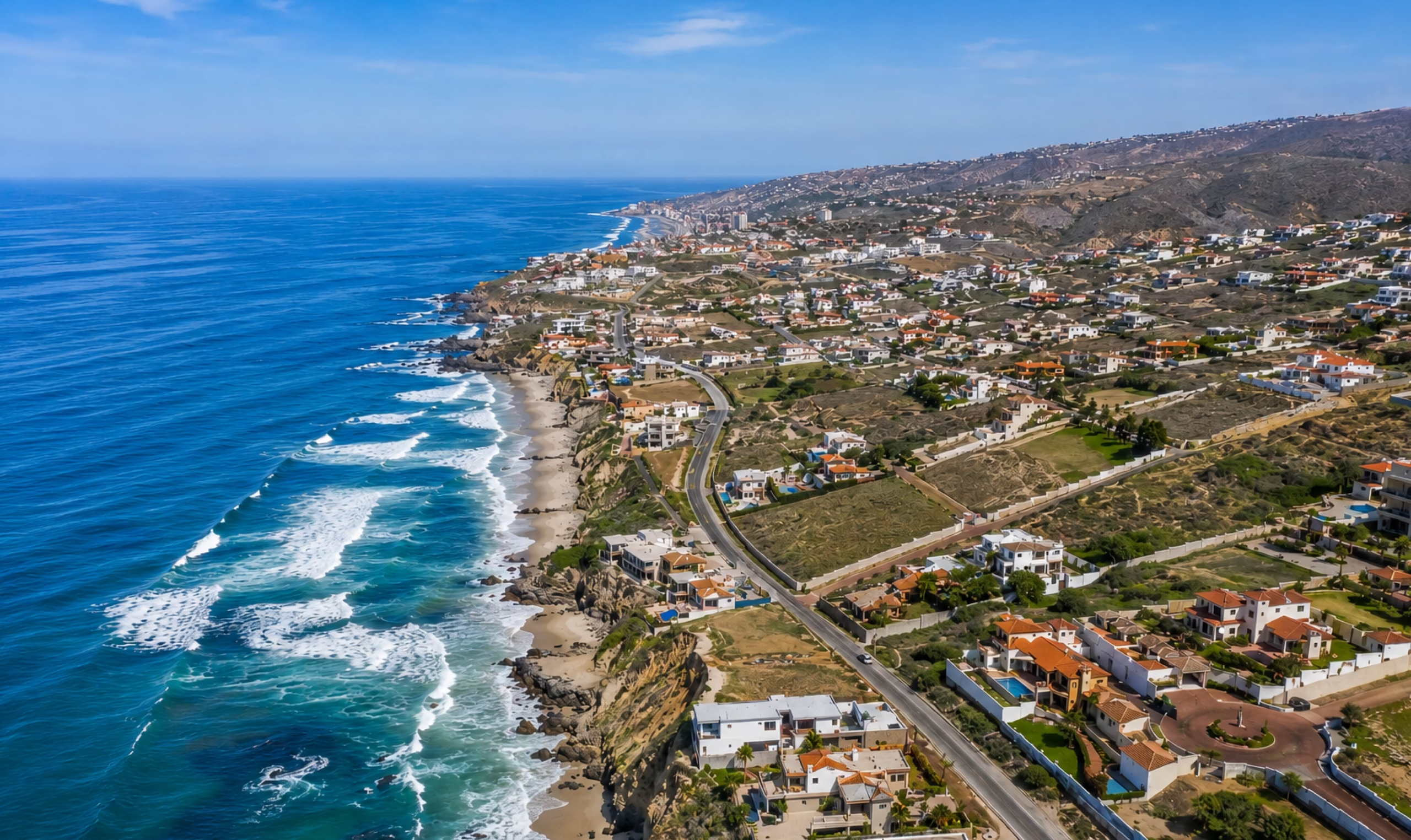
Quick Summary: With recent events making headlines in other parts of Mexico, US and Canadian patients considering medical tourism have understandable safety questions. This guide provides factual context about Mexico’s geographic diversity, Tijuana’s unique position as a medical tourism hub and growing expat destination, and what you need to know about traveling safely for hair restoration–and potentially discovering your next home.
Here’s something interesting we’ve noticed at Hair Medical Restoration: many of our US and Canadian patients come to Tijuana for a hair transplant and leave asking about real estate.
It makes sense. You spend a few days in the area, experience the climate, the cost of living, the proximity to the US border, the quality of life—and you start thinking: “Could I live here?”
You’re not alone. Tijuana and Baja California have become one of North America’s fastest-growing expat destinations, with thousands of Americans and Canadians choosing to relocate, retire, or maintain second homes in the region.
This guide serves two purposes:
Let’s start with the immediate concern—then explore what makes this region unique for both healthcare and living.

Let’s start with honesty. If you’ve been following news about Mexico, you’ve likely seen headlines about security incidents in some cities or states. These events understandably raise concerns among travelers, including those considering medical tourism.Why we’re telling you this: At Hair Medical Restoration, we believe informed patients make better decisions. We won’t minimize concerns or pretend challenges don’t exist. Instead, we’ll give you the context to understand the bigger picture.
Here’s something crucial that often gets lost in headlines: Mexico is not one place. It’s a country of nearly 2 million square kilometers (762,000 square miles). If moved to Europe, Mexico’s northern border would align near the UK, while its southern border would reach toward the Middle East (Turkey). It is roughly eight times larger than the U.K.
To put this in perspective:
The reality: Security situations vary significantly by state, city, and even neighborhood. What happens in Mexico City or Puerto Vallarta does not automatically impact Tijuana, just as an incident in one US state doesn’t affect another thousands of miles away.
Northern Border States (including Baja California where Tijuana is located):
Pacific Coast Tourism States:
Interior and Southern States:
The US State Department itself recognizes this diversity, providing state-by-state travel advisories rather than blanket warnings—much like how certain neighborhoods in cities have different safety profiles than others.
Baja California (where Tijuana is located) has maintained its status as a medical tourism hub throughout 2025-2026. The region’s:
Events in other cities do not affect:
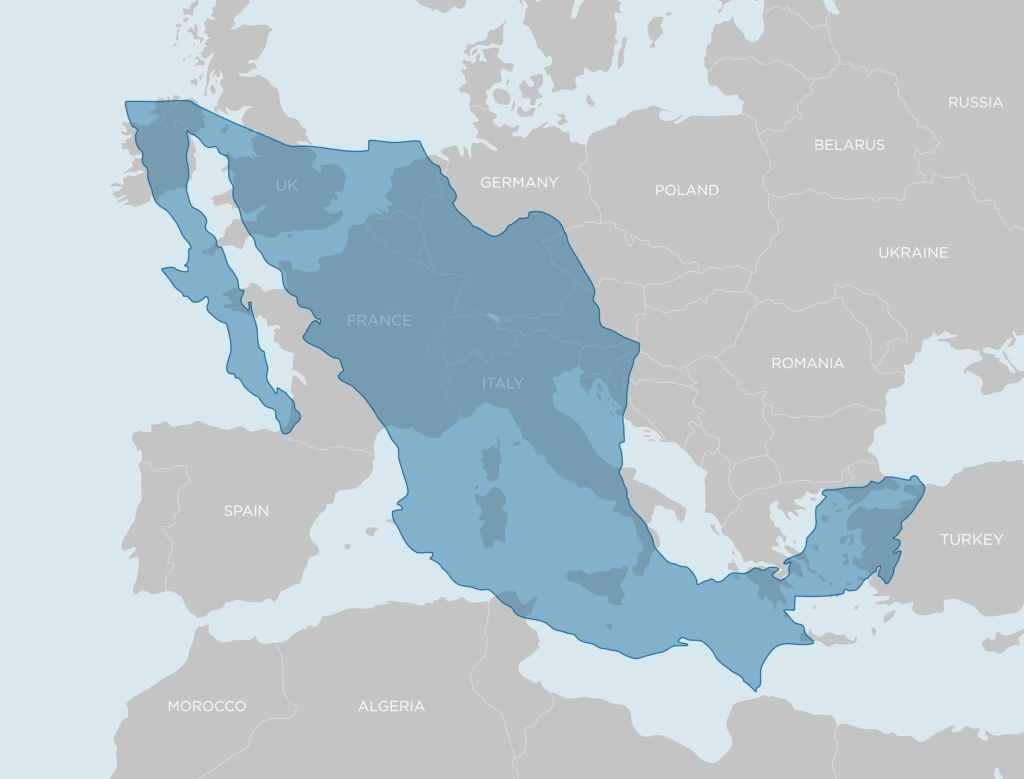
Mexico map overlaid on Europe: its northern border aligns near the U.K., while its southern border reaches toward Turkey—showing it is roughly eight times larger than the U.K.
Tijuana’s emergence as North America’s leading medical tourism destination isn’t accidental. It’s the result of decades of development, investment, and a unique geographic advantage that serves US and Canadian patients.
But something else has been happening simultaneously: Tijuana and Baja California have evolved into one of the most desirable expat destinations in North America. The same factors that make it ideal for medical tourism—proximity to the US, modern infrastructure, cost savings, quality services—make it equally attractive for living.
Mexico’s Medical Tourism Market:
Baja California’s Growing Appeal:
Why the growth?: Many discover Baja California through medical tourism, business travel, or vacation—then realize the lifestyle appeal.
The same advantages that attract medical tourists also attract people looking to relocate or retire:
1. Geographic Advantage:
2. Economic Integration:
3. Massive Cost Advantages:
4. Quality Infrastructure:
5. Climate and Lifestyle:
The common thread: Whether you’re coming for healthcare or to live, Baja California offers quality, affordability, and proximity to the US in ways few places can match.
Here’s something interesting that doesn’t get discussed enough: Tijuana’s massive medical tourism volume has actually improved quality and safety across the board.
Why this matters for hair transplant patients:
Experience Concentration:
The Malcolm Gladwell “10,000 Hour Rule”: Tijuana surgeons exceed this threshold rapidly, developing expertise through sheer volume.
Technique Refinement:
Quality Competition:
According to Patients Beyond Borders su
What this means: The large number of patients creates a feedback loop that continuously improves quality, safety, and service.
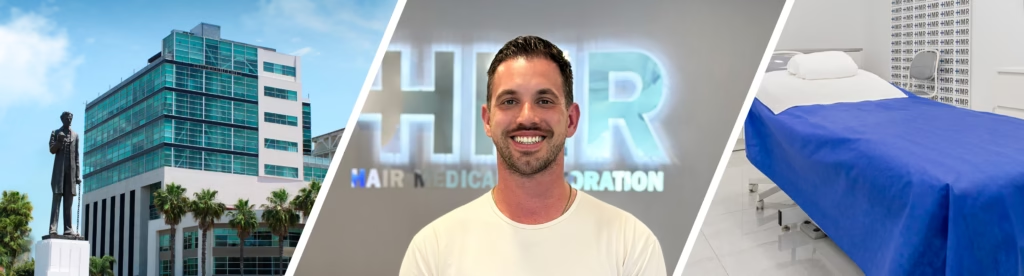
Tijuana’s medical tourism sector operates in specific, well-established areas with dedicated safety infrastructure—designed with US and Canadian patients in mind.
Where medical tourists actually go:
What it’s like:
Typical patient journey (where you actually go):
Notice: This path is well-established, heavily traveled, and specifically designed for our patients.
Recommended areas for US and Canadian visitors:
Zona Rio (Where you’ll be):
Playas de Tijuana:
La Cacho/Hipódromo:
Many US and Canadian patients visiting Tijuana for medical care discover Baja California’s appeal for longer stays or even relocation. The region offers:
For those interested in exploring Baja California beyond medical tourism, opportunities like those from Vive la Baja highlight premium residential lots in coastal and urban settings throughout the region—specifically designed with foreign residents in mind.
Yes, Tijuana has challenges:
But we ensure that our patients doing medical tourism:
The difference: Wandering around unfamiliar areas at night vs. Following an established medical tourism path with professional support.
Let’s get practical. Here’s what you actually need to know to travel safely from the US or Canada for your hair restoration procedure.
Documentation:
Medical Preparation:
Insurance and Planning:
Communication:
Walking Across (Recommended for medical patients):
Crossing Times:
What You’ll Need:
Accommodation: ✓ Hotel Real Del Rio (HMR partner hotel) ✓ 5-minute walk to clinic in Zona Rio ✓ Medical patient-familiar staff ✓ Safe, comfortable recovery environment ✓ To move around use transportation apps (Uber, DiDi, InDriver) instead of street caps.
Stay in Safe Areas: ✓ Zona Rio (medical/business district): Plaza Rio and Landmark ✓ Hotel Real del Rio ✓ Hipódromo Area: Plaza Galerias.
General Safety: ✓ Keep valuables secure ✓ Only carry necessary cash ✓ Stay aware of surroundings ✓ Enjoy responsibly ✗ Don’t flash expensive items
Communication: ✓ Keep phone charged ✓ Know your hotel address ✓ Have your patient coordinator contact saved ✓ Stay in touch with your family
Recovery Period:
Returning Home:
Follow-Up Care Options:
In Tijuana:
US/Canada Side:
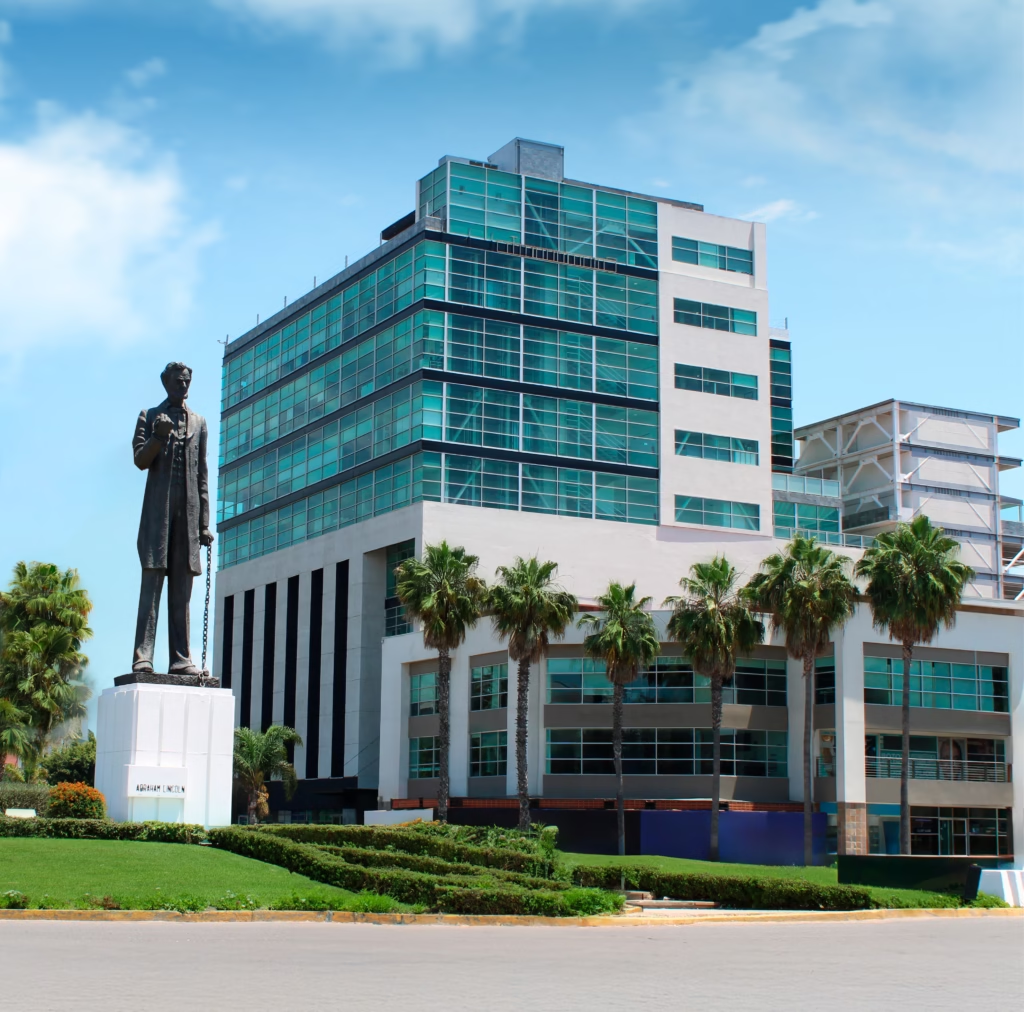
Here’s a pattern we see regularly at HMR: A patient from California, Arizona, or Canada comes for a hair transplant. They stay at Hotel Del Real Del Rio for a few days. They walk around Zona Rio, maybe explore Playas de Tijuana or drive to Rosarito. They notice the restaurants, the weather, the lifestyle—and the prices.
Then they ask: “What’s it like to actually live here?”
Many of our US and Canadian patients have discovered that Baja California offers more than just medical tourism—it’s become one of North America’s most attractive destinations for relocation, retirement, and second homes.
What’s Driving the Trend:
1. Proximity Without Sacrifice: Live 20-40 minutes from US border
2. Lifestyle Upgrade: Ocean-view properties at fraction of California prices
3. Financial Sense: Cost of living: 40-60% lower than Southern California
4. Quality of Life: Less stress, slower pace, English widely spoken in expat areas
5. Investment Opportunity: Growing market as more Americans discover the region
This is where Vive la Baja comes in. For Americans and Canadians dreaming of life in Baja California, uncertainty around property ownership, safety, and legal protection can be a major barrier.
Vive la Baja removes that uncertainty—offering vetted residential projects, transparent processes, and trusted legal guidance so you can move forward with confidence.
IMAGEN: vive-la-baja-properties-showcase.jpg
ALT: From beachfront living in Rosarito to wine country estates in Valle de Guadalupe—explore modern, secure developments designed for North American residents
The bottom line: Many people come to Tijuana for medical care and discover a place they want to call home. If that sounds like you, resources like Vive la Baja can help make that transition safe, smooth, and successful.
At Hair Medical Restoration, your safety isn’t just important—they’re fundamental to everything we do for our US and Canadian patients.
Your Patient Coordinator: Available for Whatever You Need
Your patient coordinator’s contact information is personal to you, ensuring dedicated attention and support. This isn’t a general customer service line—it’s your direct connection to HMR throughout your journey.
Pre-Arrival:
Arrival and Transport:
Facility Safety:
During Your Stay:
Post-Procedure Options:
Here’s our promise: If at any point before, during, or after your procedure you feel unsafe or uncomfortable:
Contact us immediately:
We will:
Your well-being comes first. We want every patient to feel secure, informed, and confident throughout their hair restoration journey.
Yes, when following established medical tourism protocols. Tijuana’s medical tourism sector operates in secure, protected areas with dedicated infrastructure for international patients. The San Ysidro border crossing is the world’s busiest, with over 50 million crossings annually. Medical tourism facilities in Zona Rio are specifically designed for US and Canadian patients, with safety measures, English-speaking staff, and coordination medical systems. Additionally, HMR Scottsdale offers follow-up care in the US if you prefer.
They don’t. Mexico is nearly 2 million square kilometers—Jalisco is over 1,400 miles from Tijuana. That’s like asking how events in Miami affect Seattle. Throughout February 2026, Tijuana’s medical facilities (including HMR) maintained completely normal operations, border crossings continued routine flow, and no disruptions to medical tourism occurred in Baja California.
Tijuana is a border city with deep US integration—thousands cross daily for work and business. The medical tourism sector operates in Zona Rio, an upper-class business district minutes from the border. This is fundamentally different from interior resort destinations or southern Mexico. Tijuana accounts for 40% of ALL medical tourism to Mexico, creating specialized infrastructure that doesn’t exist elsewhere.
Most US health insurance doesn’t cover elective procedures abroad. However, you don’t typically need special insurance for the procedure itself (you pay directly, which is why costs are transparent). Some patients choose medical evacuation insurance for peace of mind, though complications are rare. Discuss insurance options during your consultation to understand what’s recommended for your situation.
That’s not a problem! HMR has a clinic in Scottsdale, Arizona where you can receive PRP treatments, follow-up consultations, and ongoing care. Many US patients choose to have their procedure in Tijuana for the cost savings, then do all follow-up care at HMR Scottsdale. We coordinate seamlessly between our network of clinics (Tijuana, Scottsdale, Monterrey, and Hermosillo).
Absolutely. You’ll be assigned a patient coordinator who is available for whatever you need—before, during, and after your procedure. This isn’t a general customer service line; it’s your personal point of contact throughout your hair restoration journey. You’ll have their direct contact information to reach out anytime.
Yes, many patients do, but we often recommend walking across (park on US side, walk to Mexican side, coordinate with our clinic or take an Uber to hotel). This avoids vehicle crossing delays and makes return easier post-procedure. Your patient coordinator can help you decide what works best for your situation.
Stay in: Zona Rio (where HMR and Hotel Del Real Del Rio are located—this is the medical/business district). This is where you’ll spend your time, and it’s safe, modern, and designed for international patients.
Also safe: Playas de Tijuana (beach area), La Cacho/Hipódromo (trendy neighborhoods).
Stick to our clinic’s recommended areas and use transportation apps (Uber, DiDi, InDriver).
Over 90% of patients surveyed believe quality of care in Tijuana is comparable to or better than US facilities. Many Tijuana surgeons are US-trained, facilities use the same equipment, and techniques are identical. The difference is cost structure—lower overhead in Mexico creates 40-70% savings while maintaining quality. High patient volume means surgeons develop exceptional skill through sheer experience.
Contact your patient coordinator immediately. They’re available for whatever you need and will address any concerns promptly. You can also contact the Canadian Consulate or US Consulate in Tijuana if needed. Don’t hesitate to speak up—your safety and comfort are our priority. We want you to feel secure throughout your entire experience.
Yes, and thousands of Americans and Canadians are proving it every day. Over 60,000 US citizens now live in Baja California, with concentrations in safe, established expat areas like Rosarito, Ensenada, Valle de Guadalupe, and Playas de Tijuana.
Like anywhere, location matters. Offerings like those from Vive la Baja are specifically designed for secure, elevated living, and transparent legal processes with foreigners residents in mind. Many expats maintain the same or higher quality of life than in the US while enjoying ocean views, wine country access, and year-round perfect weather—all at 40-60% lower cost of living.
The reality: Our medical tourism patients often become our expat neighbors. They come for healthcare, experience the lifestyle, and decide to invest in property. It’s happening so frequently that developers like Vive la Baja now specialize in serving this exact transition from visitor to resident.
Medical tourism to Tijuana isn’t without considerations—but with proper information and preparation, millions of North American patients safely receive quality care every year. And many discover something unexpected: a place they might want to live.
The facts:
What you should do for medical tourism:
What you should do if exploring expat living:
What we promise at HMR:
At Hair Medical Restoration, we understand that choosing medical tourism is a significant decision. We’re committed to making your experience safe, comfortable, and successful—with support in both Mexico and the United States.
What we offer:
Your next step: Schedule a consultation to:
Ready to learn more about safe, quality hair restoration in Tijuana?
Schedule Your Free Consultation
📍 Locations:
Tijuana, Mexico (10 minutes from San Diego, Zona Rio district)
Scottsdale, Arizona (US-based follow-up care and treatments)
Monterrey & Hermosillo, Mexico
💻 Virtual consultations available
🌐 Visit: hairmedicalrestoration.com
📞 US: +1 (619) 400-3147
📞 MX: +52 (664) 907-0828
Many of our patients tell us the same story: “I came for a hair transplant and fell in love with Baja California.”
If you’re reading this far, you might be one of them. Maybe you’re curious about the ocean views, the wine country, the lifestyle, and the cost savings. Maybe you’re thinking about a vacation property, retirement home, or even full relocation.
You’re not alone. Thousands of Americans and Canadians have made this exact transition—from medical tourist to property owner to full-time resident.
Vive la Baja specializes in making that transition safe, legal, and successful. They understand what North American buyers need: security, transparency, and guidance through Mexican property law. Schedule a meeting with Vive la Baja and start a guided discovery that turns your Baja dream into a clear, achievable plan.
What Vive la Baja Offers:
Ready to Explore?
Visit vivelabaja.com to:
📧 Contact Vive la Baja: clientcare@vivelabaja.com
🌐 Website: vivelabaja.com
📱 Follow developments: Instagram: @viveenlabajamx, Facebook: @viveenlabajamx
Come for the hair transplant. Stay for the lifestyle. From Rosarito beaches to Valle de Guadalupe vineyards—discover why thousands of Americans and Canadians are choosing Baja California as their new home. Vive la Baja makes it safe, legal, and simple
Have questions about medical tourism safety, traveling to Tijuana as a US or Canadian patient, or hair restoration procedures? Contact Hair Medical Restoration. Our experienced team is here to provide honest, comprehensive information to help you make the best decision for your hair restoration journey.
Take the first step with confidence.
Book your free video consultation with one of our expert doctors at Hair Medical Restoration and get expert advice, a personalized plan and clear answers, all tailored to you.
✅ Hair Medical Restoration is committed to delivering world-class care, personalized treatments, and natural results.
Your new hair starts here.