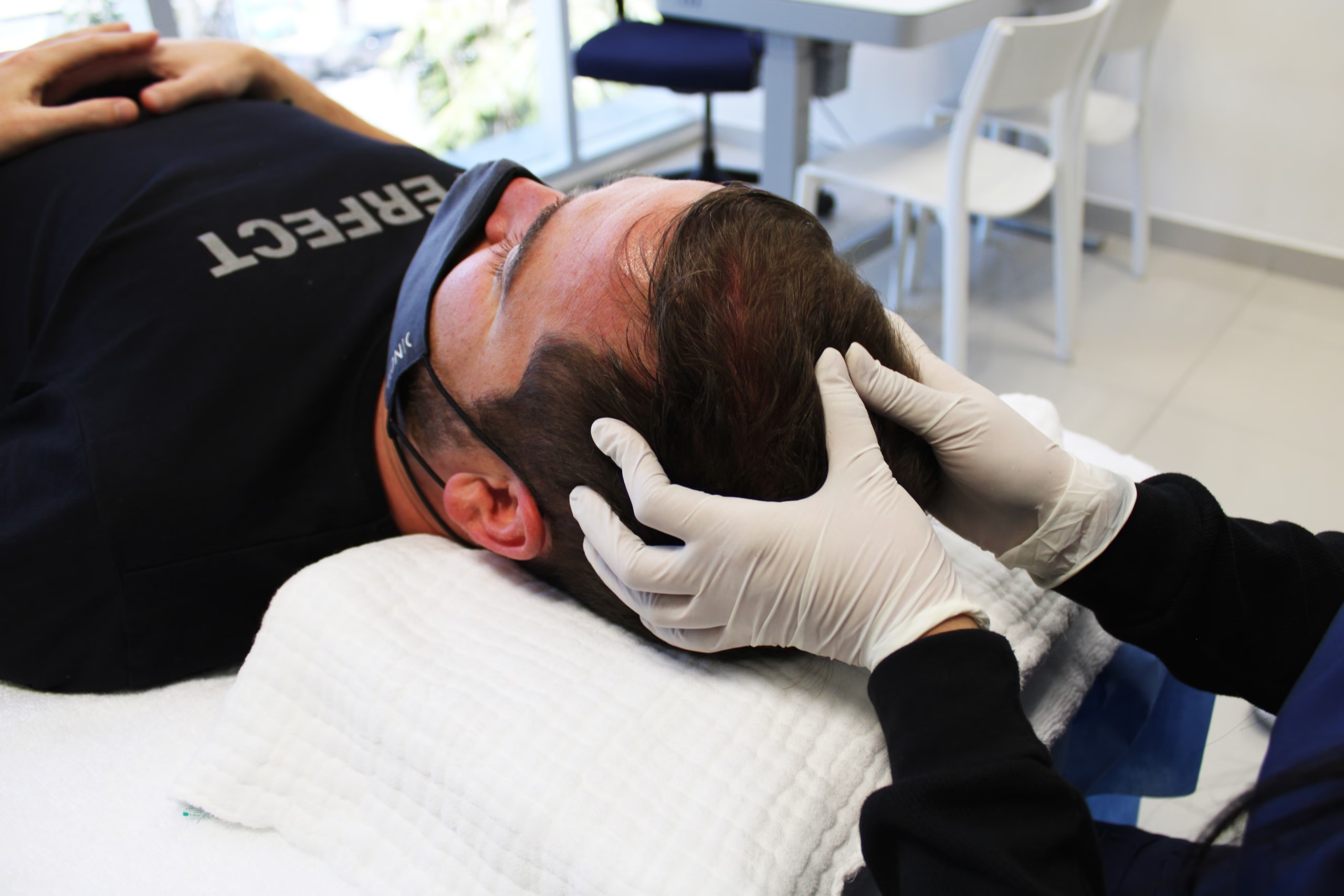
How Many Hair Grafts Do I Need? A Complete Hair Transplant Guide
If you're considering a hair transplant, one of the first…


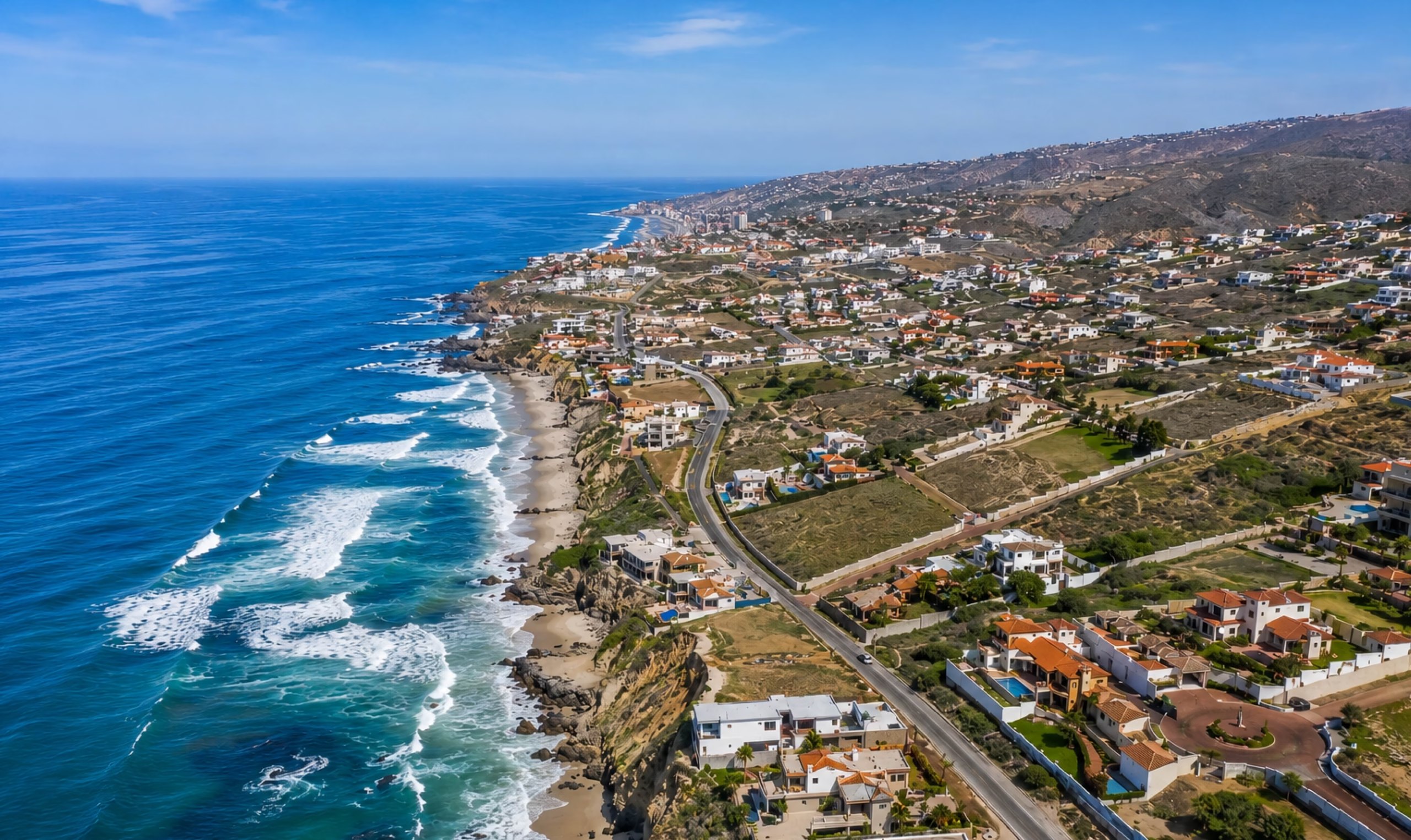
From a hair transplant in Tijuana to an ocean-view lot in Rosarito. The story that more patients are living than you’d expect.
In collaboration with Vive la Baja | vivelabaja.com
Quick Summary
Hundreds of thousands of US and Canadian patients travel to Tijuana every year for world-class, affordable hair restoration—and many of them leave with more than a new hairline. They leave with a new dream: owning a piece of Baja California. From Pacific-view lots in Rosarito to wine-country land in Valle de Guadalupe, this guide explores why North American visitors are falling in love with Baja—and how Vive la Baja makes the leap from visitor to landowner surprisingly straightforward.
It starts with a hair transplant.
You fly into San Diego, cross into Tijuana, walk into an HMR clinic that feels like it belongs on Wilshire Boulevard, and spend a couple of days recovering. You take a walk along Zona Rio. You have dinner somewhere extraordinary. You notice the Pacific Ocean glittering in the distance on the drive south. You ask yourself: wait—how much would this cost in California?
Then you drive south.That’s the pattern we’ve watched repeat itself dozens of times. Patients from California, Arizona, Texas, British Columbia, and Ontario come to Hair Medical Restoration for a hair transplant—and leave quietly researching real estate. Some come back within a year and purchase a lot. A few are already building
US citizens currently living full-time in Baja California
If you’ve found yourself daydreaming about Baja California after your procedure—or if you’re planning a trip to HMR and wondering what else is out there—this guide is for you. We partnered with Vive la Baja to walk you through the Baja California destinations that are capturing North American hearts right now, and to explain exactly how you can claim your own piece of this extraordinary peninsula.
If you’ve come to HMR for a hair transplant, you’ve already experienced Tijuana’s Zona Rio—the modern, upper-class business district that surprises almost every first-time visitor. Wide boulevards, high-rise hotels, international restaurants, contemporary coffee shops, and some of the strongest medical infrastructure on the continent. It’s not what people imagine when they hear “Tijuana.”
📖 We published a dedicated guide on Tijuana, safety, and medical tourism:
🗓️ Planning what to do while you recover? Don’t miss:
Your Hair Transplant Recovery Guide to Tijuana: What to Do, Eat & Explore Beyond the Clinic →
What’s worth adding here is that Tijuana is not just a border crossing—it’s a cosmopolitan city of over two million people with a serious culinary identity, a world-class craft beer scene, and neighborhoods that wouldn’t look out of place in a Southern California lifestyle magazine. Playas de Tijuana in particular—a beachfront neighborhood on the Pacific, with ocean access, walking streets, and a relaxed expat community—consistently surprises visitors who assumed Tijuana was only about the medical district.
For many HMR patients, Tijuana is the first chapter of a much longer Baja story. The city functions as a gateway: geographically, culturally, and emotionally. Once you realize that quality medical care in a modern, functional city right next to San Diego, the next natural question is what else is possible down here?For those who want to stay close to the border—whether for work, family, or logistics—Vive en la Baja offers urban lots in the Tijuana area, positioned for buyers who want maximum access to the US while planting roots in Mexico. These are terrenos urbanos: city land where you build on your terms, in a location that makes the cross-border lifestyle genuinely seamless.
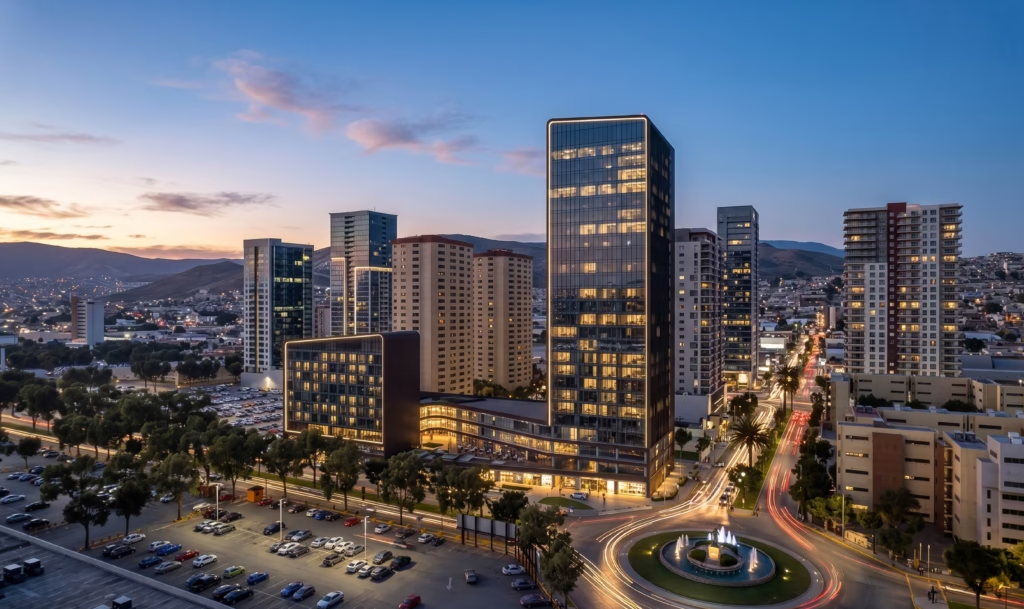
About 20 miles south of the San Diego border, the Pacific coastline opens up around Rosarito Beach—and this is where most HMR patients have their first genuine “wait a minute“ moment.
Rosarito is a beach city that runs along a stunning stretch of Pacific coastline. Its main boulevard is lined with restaurants, surf shops, open-air markets, and boutique hotels. Behind the oceanfront strip, residential hillsides climb to panoramic views of the water.
What makes Rosarito particularly compelling in 2026 is its growth trajectory. Remote workers, young professionals, retirees, and weekend warriors from San Diego and Los Angeles have discovered that the coastal lifestyle that has all but disappeared from Southern California is alive and very accessible just south of the border.
| 🌊 Direct Pacific coastline access | surf breaks, sandy beaches, and ocean-view hillsides |
| 🏘️ Mature expat community | English widely spoken, USD accepted everywhere |
| 🔒 Gated & secured residential communities | 24-hour private security, HOA-managed |
| 🚗 25 minutes from the US border | San Diego is never far when you need it |
| 🏗️ Build-what-you-want land | Vive la Baja coastal and urban lots available here |
Vive la Baja offers both coastal and urban lots in the Rosarito area. These are terrenos—land lots, not pre-built homes. That’s the point: you design and build exactly what you want, whether that’s a weekend escape, an oceanfront rental, or a permanent home. The canvas is blank (and the view is included).If your vision of Baja is falling asleep to the sound of the Pacific Ocean, Rosarito is where the conversation starts.
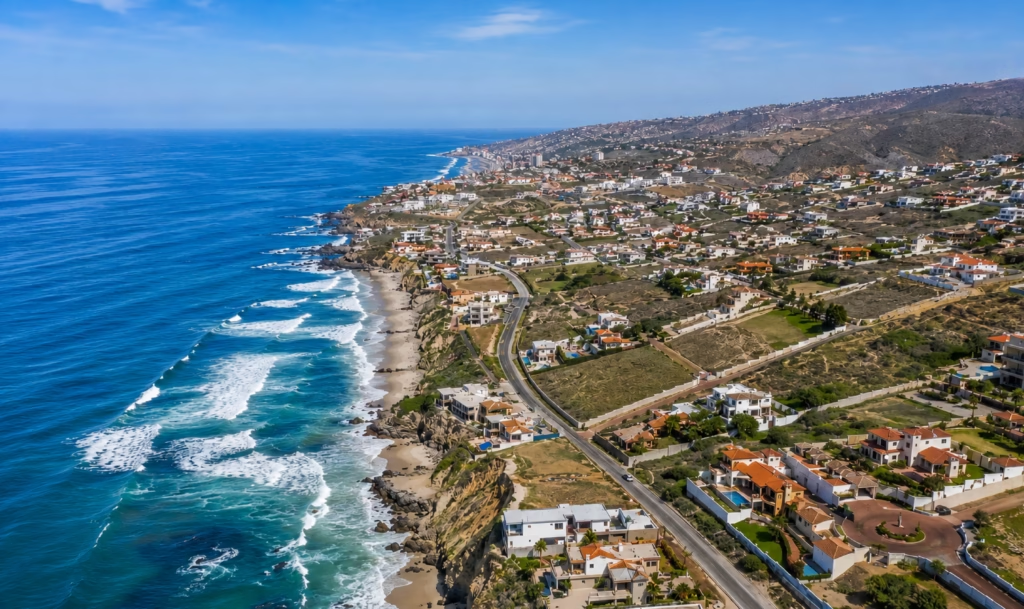
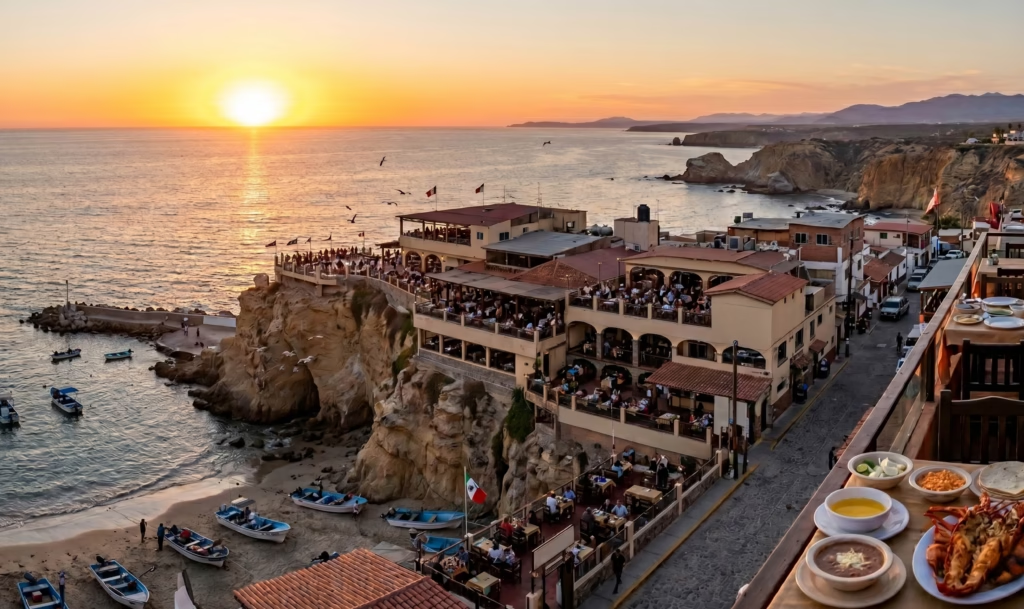
About 12 miles south of Rosarito, perched on a coastal bluff above the Pacific, sits one of Baja California’s most beloved destinations: Puerto Nuevo.
If you’ve never been, Puerto Nuevo is famous for one thing first—lobster. The town has built its entire identity around Puerto Nuevo-style: the crustaceans are split and flash-fried, served with butter, rice, beans, and fresh tortillas, enjoyed alongside a cold beer or a classic margarita as the sun descends over the Pacific. It’s one of those places that has its own rituals, its own loyal devotees, and its own irreplaceable atmosphere.
But Puerto Nuevo is more than a meal. Is:
Lots in this area represent something beyond real estate: a lifestyle statement.
Vive la Baja has lot options in the Puerto Nuevo area for buyers drawn to the bluffs, the views, and that particular brand of Baja quiet. Think weekend retreat. Think building the casita that your California friends will beg to visit. Think owning a piece of a place that hasn’t changed its soul in decades, but is about to appreciate significantly in value.
Many HMR patients who visit Puerto Nuevo for the first time describe the same experience: “We came for dinner. We stayed for the sunset. Now I can’t stop thinking about that view.” That’s not an accident. That’s just Baja being exactly what it is.
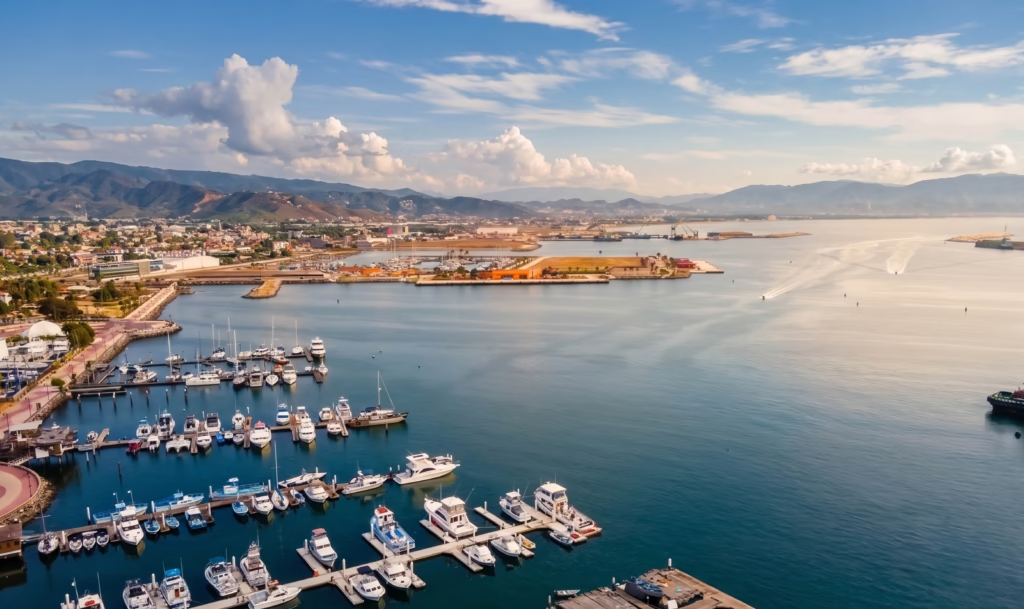
An hour south of the border, the city of Ensenada unfolds around a stunning natural bay on the Pacific—and it consistently surprises people who dismissed it as just a cruise ship stop.
Ensenada is Baja California’s second-largest city and better still: a genuine, functioning port city with a working harbor, a beautiful waterfront promenade (El Malecón), cruise ship infrastructure, fresh seafood markets, a thriving culinary culture, and one of Mexico’s most celebrated craft beer scenes. It’s also the gateway to Valle de Guadalupe wine country and access to outstanding beaches in both directions along the coast.
For North American expats, Ensenada occupies a category of its own. It offers real city infrastructure, while maintaining the relaxed rhythm of a coastal community. The climate is Mediterranean: mild, breezy, and remarkably consistent year-round. The options for how to spend a day here never run out:
Ensenada has also evolved significantly as a real estate market. The combination of natural beauty, genuine city infrastructure, proximity to wine country, and relatively easy border access (about 90 miles, or roughly 1.5 hours, from San Diego) makes it one of the most balanced land purchase decisions in all of Baja California. Buyers who positioned themselves early in the Ensenada market have seen steady appreciation as the city’s hospitality, tourism, and expat infrastructure have grown together.Vive la Baja offers lots in Ensenada—urban parcels close to the waterfront and services, as well as hillside land with sweeping views of the bay. Whether you’re thinking primary residence, vacation property, or a long-term investment, Ensenada’s fundamentals make it one of the most compelling conversations you can have right now.
This is where most people’s jaws drop.
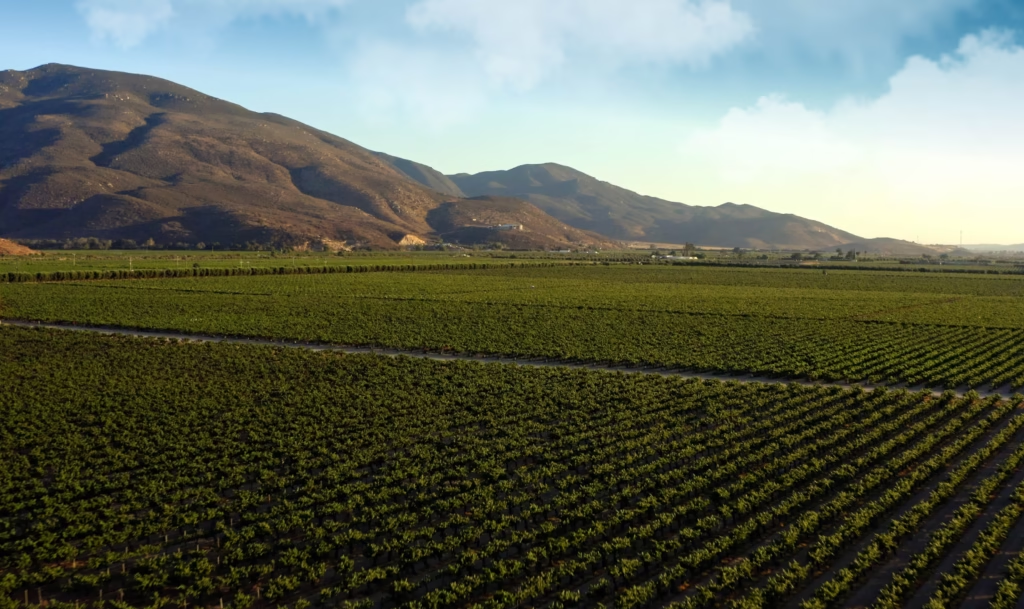
About 20 minutes east of Ensenada—tucked into a valley of rolling hills, ancient desert oaks, and volcanic soil with mineral memory of an ancient seabed—lies Valle de Guadalupe, Mexico’s premier wine region and one of the most discussed culinary destinations in all of Latin America.
The valley is home to over 250 wineries. Two of its restaurants have ranked among Latin America’s top 50. The cuisine that has emerged here—deeply rooted in Baja’s coastal ingredients, ranch tradition, and Mediterranean influence—has a name of its own: Baja Med. Chefs trained in France, Spain, and New York, have relocated to cook in Valle de Guadalupe because the ingredients, the landscape, and the creative freedom are unmatched.
The vibe, as one food-and-wine writer put it, is “laidback luxury.” You drive down a dusty desert road, arrive at a winery perched in stunning architecture overlooking the valley, pour world-class wine, and have a three-hour lunch under an olive tree. Then you watch the afternoon light fall across the vines and wonder how you didn’t know about this sooner.
Wine lover or not, once you’re there it’s really not difficult to start picturing your everyday life looking exactly like this.
Here’s the real estate angle: Valle de Guadalupe is commercially arrived—but as an investment market, it’s still early enough that early buyers are positioning themselves for meaningful appreciation. The explosion of hospitality investment in the valley—boutique hotels, destination restaurants, event venues, wine tourism infrastructure—has been followed, predictably, by growing land demand from buyers with vision.
For buyers interested in a private vineyard, a boutique rural retreat, or simply a serene country parcel in one of Mexico’s most extraordinary landscapes, Valle de Guadalupe may represent the single most compelling opportunity in all of Baja California right now.Vive la Baja offers terrenos campestres (country/rural lots) in Valle de Guadalupe—land designed for people who want to build something meaningful in wine country. Not cookie-cutter subdivisions. Land with character, in a region that is still writing its story.
Let’s talk about the part that usually gives people pause.
Buying land in Mexico as a North American is not the same as buying land in California. There are different legal structures, different title processes, and different terminology. Without the right guidance, what should be a compelling opportunity can quickly become a confusing or stressful experience. This is exactly why working with the right partner matters—and exactly why HMR is proud to collaborate with Vive la Baja.
Vive la Baja is a Baja California real estate company specializing in land lots (terrenos) for North American buyers. They’re not selling pre-built homes or housing developments—they’re offering land, and all the freedom that comes with it. Three types of lots across the key Baja destinations:
What Vive la Baja brings beyond the land itself is process clarity. They understand what North American buyers need: clear title, legal security, transparent pricing, and step-by-step guidance through Mexican property law. They’ve built their model around removing the friction that has historically kept buyers on the sidelines.
For HMR patients already in the mindset of trusting Mexican professionals with something as important as their health, working with a trusted Baja real estate team is a natural extension of that confidence. You came to Tijuana and found it was nothing like you feared. The same discovery often awaits in the land buying process.
Lots available in Rosarito, Puerto Nuevo, Ensenada, Valle de Guadalupe & Tijuana. Designed for North American buyers.
We’ll keep this honest and direct—because that’s what we do at HMR, and it’s what Vive la Baja does too.
Baja California land investment carries the same considerations as any international real estate decision. It requires due diligence, qualified legal guidance, and a clear understanding of what you’re buying. Anyone who tells you otherwise isn’t someone you should work with.
That said, the fundamentals in 2026 are genuinely compelling:
The Baja California coast sits 20 to 90 miles from San Diego, a metro area of 3.3 million people. The demand side of this equation—vacation rentals, second homes, retirement properties, remote work escapes—is structural and durable. It is not going away.
Coastal land values along the Rosarito–Ensenada corridor remain a fraction of comparable California properties. That gap drives buyers south. It also drives appreciation as each wave of North American buyers discovers the market and sends word back. The window of “early” may not stay open indefinitely.
Roads, utilities, hospitality, medical services, digital connectivity—Baja California is investing seriously in the infrastructure that makes living here genuinely easy for foreign residents. Valle de Guadalupe’s transformation from a quiet agricultural valley into an international culinary destination in under a decade is the clearest possible example of what targeted investment can accomplish.
Tens of thousands of Americans and Canadians already live full-time in Baja California. That community has created English-speaking professional networks, expat social groups, cross-border services, and a sense of belonging that makes each successive wave of buyers more comfortable. This is a self-reinforcing trend.
One of the quieter dynamics we observe at HMR is this: patients who save $8,000–$12,000 on a hair transplant compared to US pricing often experience a meaningful shift in perspective. If world-class medical care is available here at a fraction of US cost, what else is possible here? The answer, it turns out, is quite a lot. Including land you can actually afford, in a region you might actually want to live in.
You came to Baja California for a fresh start. Some of our patients find the transformation runs a little deeper than a hairline.
If you’re one of those people—or if you suspect you might be—here are your next two steps:
Can Americans and Canadians legally own land in Mexico?
Yes. Foreigners can own property in Mexico—including in coastal zones—through a legal instrument called a fideicomiso (bank trust) or through a Mexican corporation, depending on the location and situation. Vive la Baja works with qualified legal professionals to guide buyers through the appropriate structure for their purchase.
What’s the difference between buying a lot and buying a house?
Purchasing a terreno (land lot) means acquiring the land itself—you then build on it separately, according to your vision, timeline, and budget. This gives buyers significant creative control: you design the home you actually want, rather than inheriting someone else’s choices. Vive la Baja specializes in this type of purchase and can connect buyers with trusted builders in the region.
How far are these areas from the US border?
Rosarito is approximately 20–25 miles from the San Ysidro border crossing. Puerto Nuevo is about 30–35 miles. Ensenada is roughly 90 miles (about 1.5 hours by car). Valle de Guadalupe is approximately 2 hours from San Diego. All are realistic for regular visits, and many buyers use them as weekend retreats while deciding whether to relocate more permanently.
Is Valle de Guadalupe really worth the investment as real estate?
The wine region’s rapid evolution—from a handful of small wineries a decade ago to over 250 today, with internationally ranked restaurants and luxury hospitality—suggests that land values are on an upward trajectory as tourism and lifestyle infrastructure continue to develop. As with any real estate, individual outcomes depend on location, legal due diligence, and timing. An honest conversation with Vive la Baja is the best starting point.
Is Baja California safe for property ownership as a North American?
The tens of thousands of Americans and Canadians already living and owning property in Baja California suggest a mature, established market with functioning legal protections. As with any real estate purchase—domestic or international—proper due diligence and qualified legal representation are essential. Vive la Baja has built their model specifically around the security and transparency that North American buyers require.
What’s the first step?
Reach out to Vive la Baja at vivelabaja.com, by phone at 619-202-7527 (USA) or 664-912-0331 (MX), or by email at clientcare@vivelabaja.com. An initial conversation costs nothing and gives you a clear picture of what’s available, what it costs, and what the process looks like. That conversation has changed a lot of lives—including several that started with a hair transplant consultation.
Have questions about hair restoration in Tijuana, safety as a medical tourist, or the Baja California lifestyle? Contact Hair Medical Restoration. Our team is ready to help you make the best decision—for your hair, and maybe for everything else too.
Take the first step with confidence.
Book your free video consultation with one of our expert doctors at Hair Medical Restoration and get expert advice, a personalized plan and clear answers, all tailored to you.
✅ Hair Medical Restoration is committed to delivering world-class care, personalized treatments, and natural results.
Your new hair starts here.