
Quick Summary: Do you have to shave your head for a hair transplant? Not always. Learn how shave, no-shave, and partial-shave FUE techniques differ, their benefits, and how your hair loss, donor area, and treatment goals determine the right approach.
One of the most common questions patients have before a hair transplant is whether they will need to shave their head.
The short answer is not necessarily.
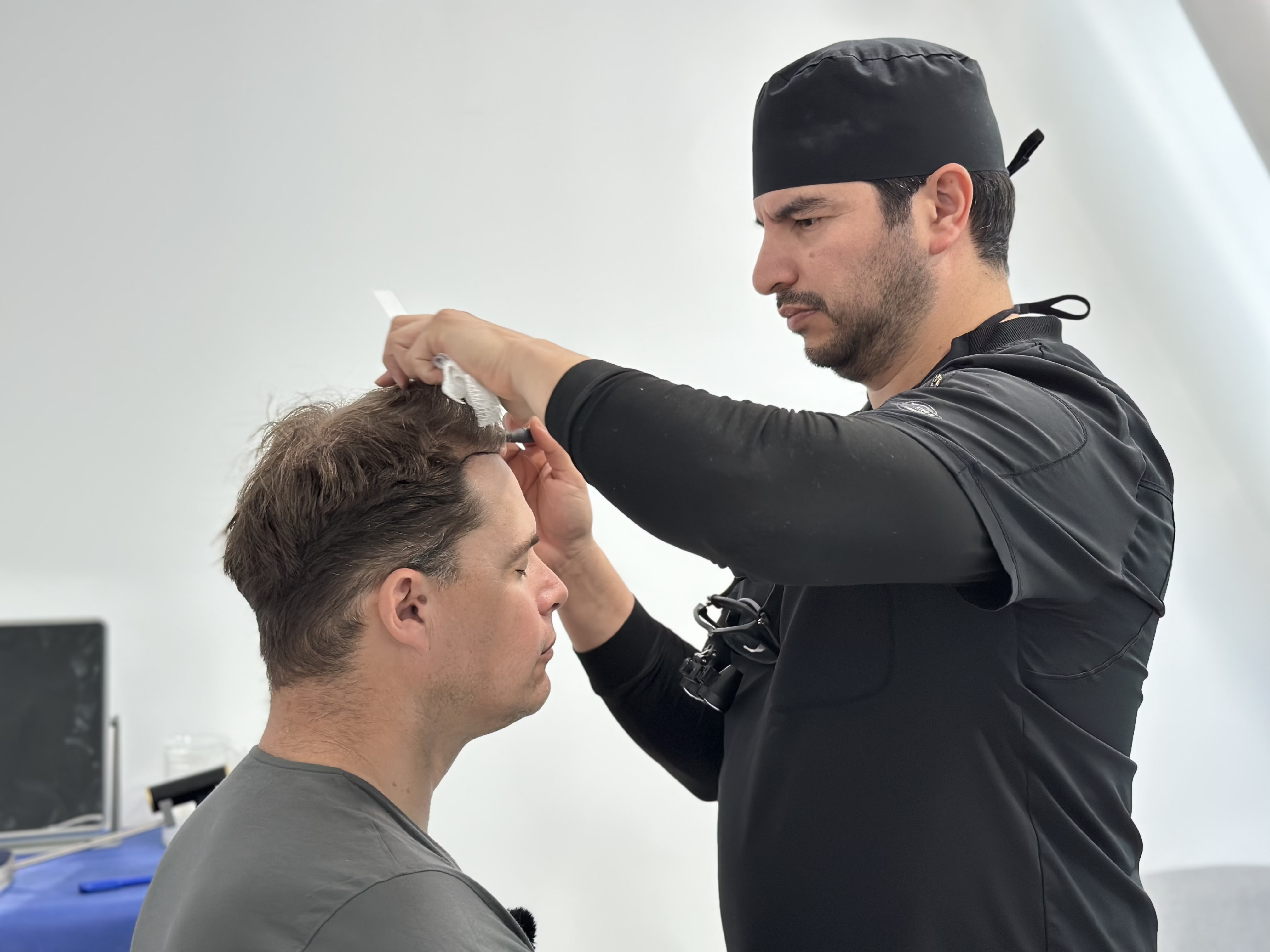
Shaving the scalp is a common part of an FUE hair transplant because it provides the medical team with greater visibility and easier access to the individual hair follicles. However, depending on your hair loss pattern, hair characteristics, donor area, and the number of grafts required, other approaches may be possible.
Patients may generally be considered for a full-shave, partial-shave, or no-shave FUE procedure.
Choosing between these options is not simply a matter of deciding whether you want to shave. Your doctor must determine whether the selected technique allows adequate access to the donor and recipient areas and whether it is appropriate for your specific type of hair loss.
For some patients, shaving may provide the most efficient and practical approach. For others, maintaining their existing hairstyle may be an important consideration, making partial-shave or no-shave FUE worth discussing.
The most appropriate technique should ultimately be determined after evaluating your hair loss, donor area, hair characteristics, and restoration goals.
FUE, or Follicular Unit Extraction, is a hair transplant technique in which individual follicular units are extracted from a donor area and transplanted into areas affected by hair loss.
With a traditional shaved FUE procedure, the hair in the treatment area is shortened before surgery. Depending on the treatment plan, this may involve shaving the donor area, recipient area, or the entire scalp.
Shaving is generally the more straightforward approach because shorter hair provides the medical team with a clear view of the scalp and individual follicles.
This visibility can be particularly useful during extraction. Hair follicles naturally grow at different angles and directions beneath the scalp. Being able to clearly see the hair shafts and surrounding area can help the medical team work more efficiently and accurately.
For patients requiring a larger number of grafts, shaving can be particularly practical because it allows the medical team to work across a larger treatment area without existing hair obstructing visibility.
Shaving can also make it easier to evaluate the donor area during the procedure and identify the appropriate follicles for extraction.
For these reasons, a shaved procedure remains a common approach for FUE hair transplantation.
However, the fact that shaving is easier does not mean that every patient must shave their head.
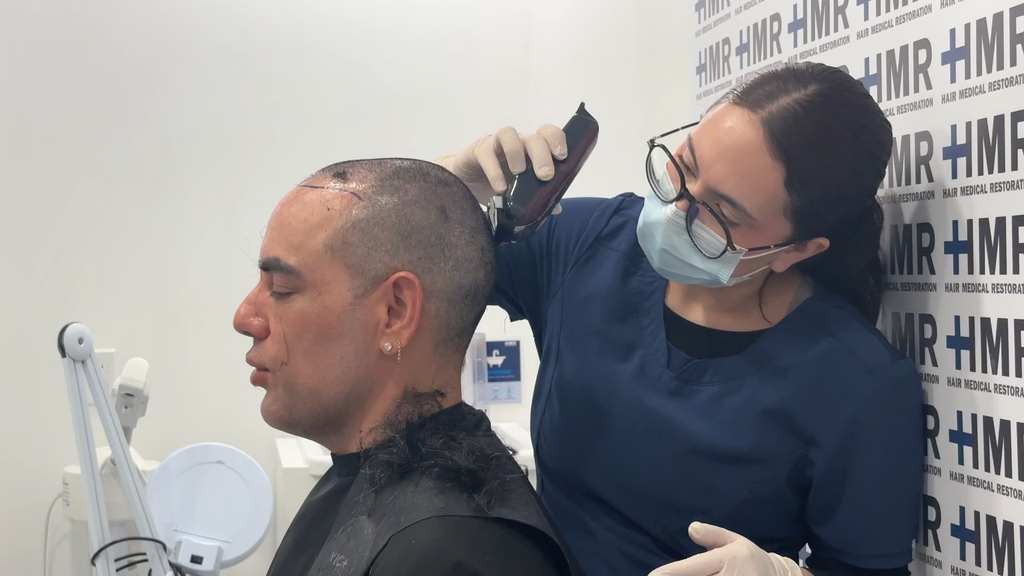
A no-shave hair transplant, often referred to as no-shave FUE, is a technique that allows the patient to keep their existing hair rather than completely shaving the treatment area before surgery.
During a no-shave procedure, individual follicles are extracted and implanted while the medical team works around the patient’s existing hair.
The biggest advantage is discretion.
Because the existing hair remains intact, it may help conceal the areas that have been treated during the early stages of recovery. This can be particularly appealing to patients who have professional, social, or personal reasons for wanting to minimize visible signs of having undergone a hair transplant.
For example, a patient with relatively long hair and mild hair loss may be able to use their existing hairstyle to help cover the donor and recipient areas.
However, no-shave FUE is not appropriate for every patient.
Working around existing hair can reduce visibility and make certain aspects of the procedure more technically demanding. The surgeon and medical team must carefully navigate between existing hairs while extracting and implanting grafts.
The number of grafts required is also an important consideration. A patient requiring a large number of grafts or treatment across a significant portion of the scalp may benefit from a shaved procedure because it provides better access and visibility.
No-shave FUE may be considered for selected patients with suitable hair characteristics, sufficient hair length and density, and a pattern of hair loss that can be appropriately treated without shaving.
It is also important to understand that no-shave does not necessarily produce better results than shaved FUE. The purpose of the technique is primarily to accommodate the patient’s preference for discretion while still allowing the procedure to be performed appropriately.
Because no-shave procedures can require additional time and technical precision, they may also have a higher cost than traditional shaved procedures.
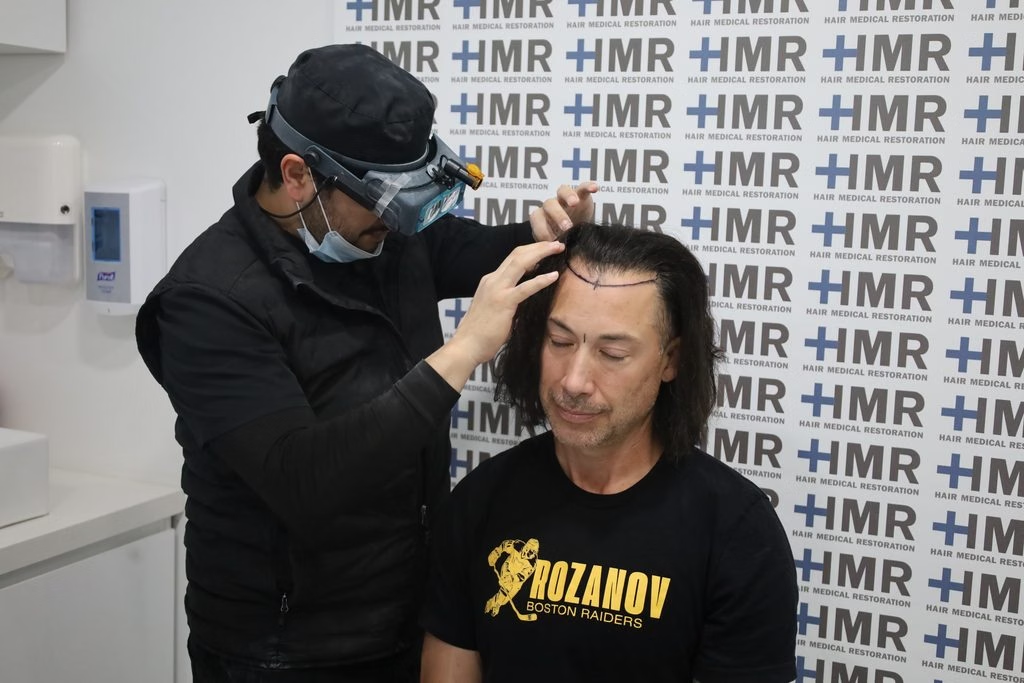
Not every hair transplant requires the same level of shaving. Depending on the patient’s treatment plan, the medical team may use different approaches to prepare the scalp while balancing surgical access with the patient’s preference for discretion.
One option that falls between a traditional shaved procedure and a no-shave approach is partial-shave FUE.
Partial-shave FUE involves shaving only specific areas of the scalp while leaving the surrounding hair longer. This allows the medical team to access the areas needed for extraction or implantation while preserving enough existing hair to help conceal the treated areas.
This approach can be particularly useful for patients who want to maintain more of their existing hairstyle while still providing the doctor with adequate visibility and access during the procedure.
Partial shave may be considered for patients with localized hair loss, smaller treatment areas, or specific donor-area requirements. However, whether it is appropriate depends on factors such as the number of grafts needed, hair length and density, and the location of the areas being treated.
Ultimately, hair transplant shaving techniques can be adapted to different patient needs. Full shave, partial shave, and no-shave FUE each offer different advantages, and the appropriate approach should be determined based on the patient’s individual case.
It is easy to assume that a no-shave procedure is automatically better because you can keep your hair. However, this is not necessarily the case.
A hair transplant should be evaluated based on the quality and long-term outcome of the restoration, not simply whether the patient has to shave.
Shaving can provide the medical team with better visibility, easier access, and a more efficient surgical process.
No-shave FUE can provide greater discretion and allow patients to maintain their current hairstyle, but it can also make the procedure more technically demanding.
For some patients, the benefits of maintaining their hairstyle may outweigh the additional complexity. For others, the improved access provided by shaving may make it the more appropriate choice.
The objective is not to choose the technique that sounds most convenient. It is to choose the technique that allows the medical team to safely and precisely perform the procedure while supporting the patient’s long-term restoration goals.
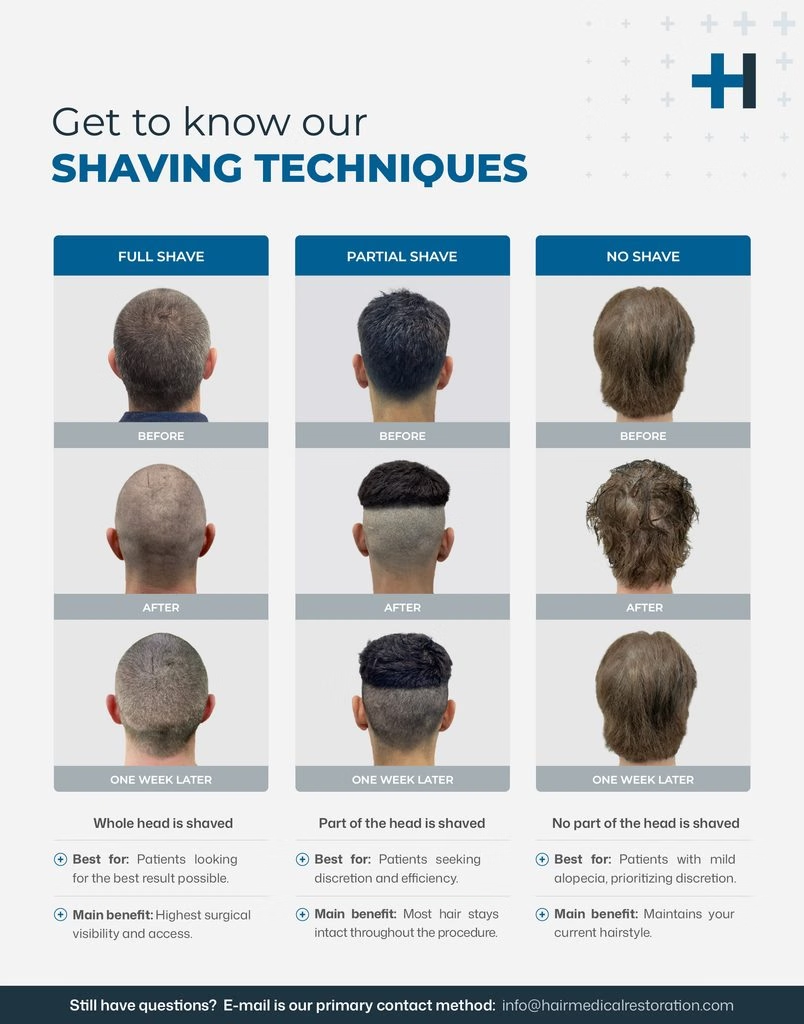
The way your hair is prepared before a hair transplant can affect how noticeable the procedure may be during the early stages of recovery. The healing process itself, however, still follows the same basic stages regardless of whether the procedure is performed with a full shave, partial shave, or no-shave approach.
After an FUE hair transplant, it is normal to experience temporary redness, small scabs, mild swelling, or sensitivity in the treated areas. These signs generally become less noticeable as the scalp heals over the first days and weeks.
With a full-shave procedure, the shorter hair can make the donor and recipient areas more visible during this initial healing period. This does not mean that recovery is worse; rather, there is simply less surrounding hair available to conceal the temporary signs of the procedure.
With partial-shave and no-shave FUE, the existing hair can help cover portions of the treated areas. This can make these approaches particularly appealing to patients who are concerned about maintaining a discreet appearance while recovering. However, keeping the hair does not eliminate the normal healing process, and some redness or scabbing may still be visible.
Regardless of the technique, proper aftercare is essential. Patients should follow their medical team’s instructions regarding washing, touching the scalp, physical activity, sun exposure, and protecting the newly transplanted grafts. Small crusts and scabs are a normal part of early healing and should not be picked or removed prematurely.
Choosing between full shave, partial shave, and no-shave FUE should be based on your individual circumstances rather than simply your preference for keeping your hair.
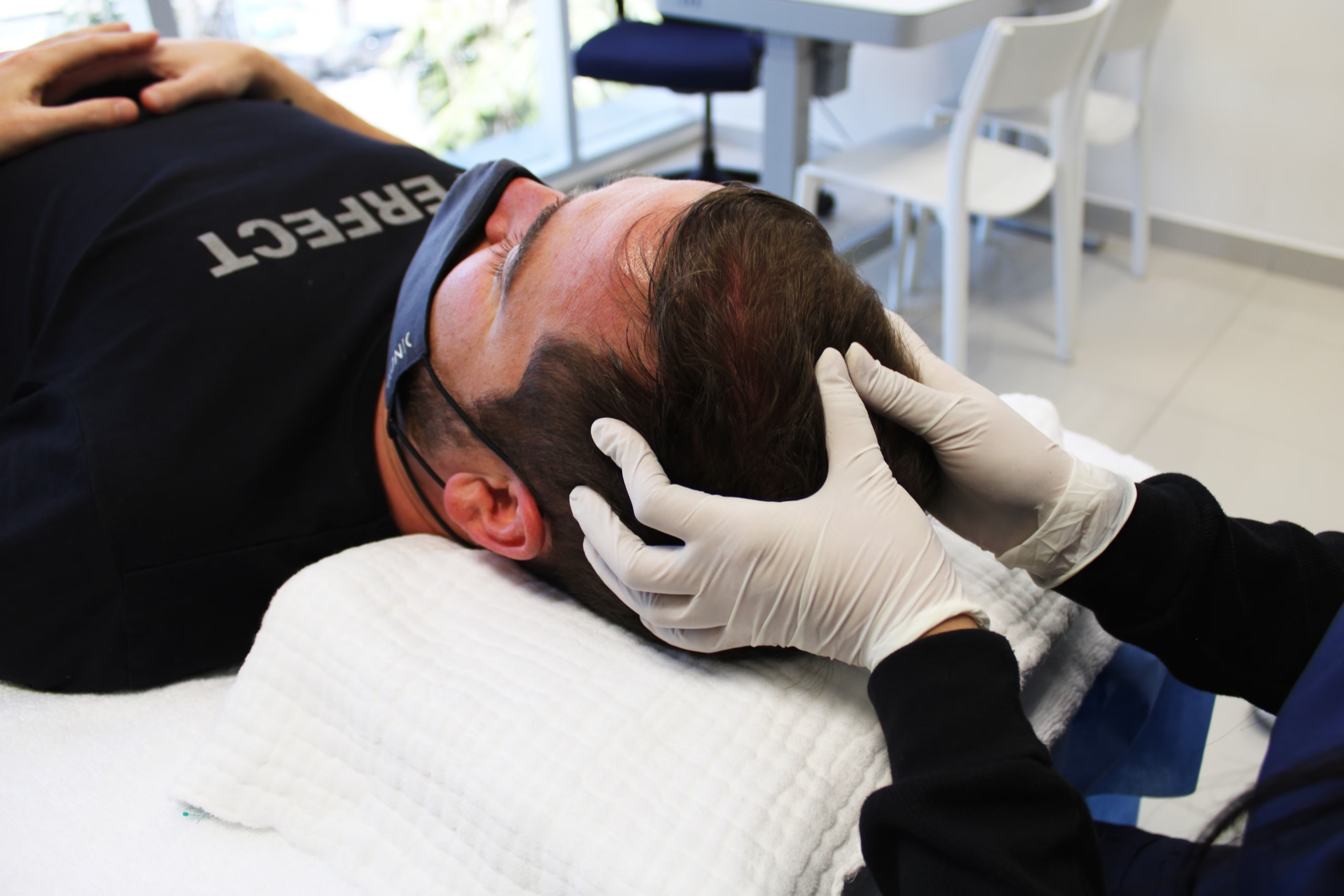
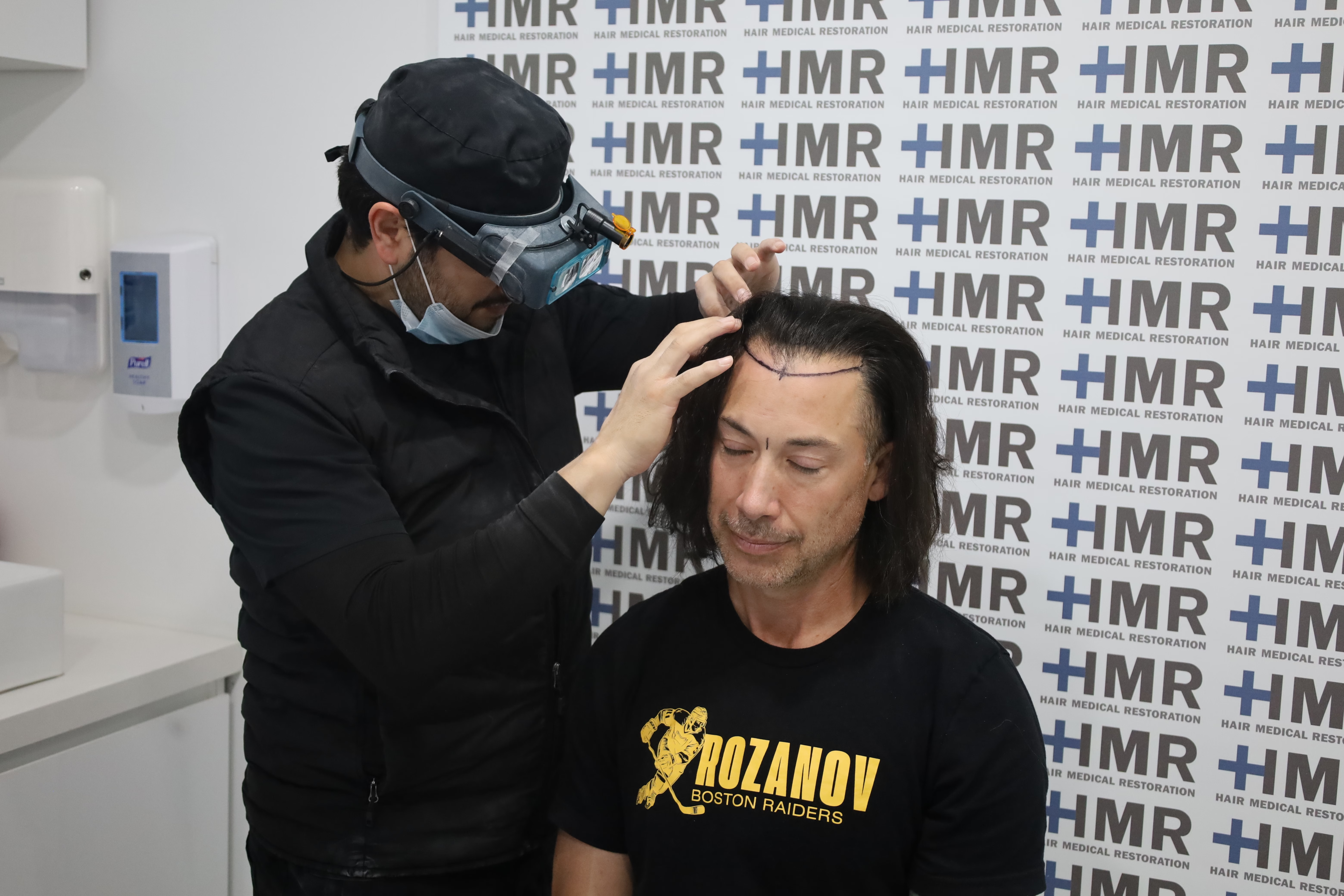
Your doctor should evaluate the extent and pattern of your hair loss, the condition and density of your donor area, hair characteristics, the number of grafts you may require, and your long-term restoration goals.
For some patients, a full shave may provide the best access and allow for a more efficient procedure. For others, partial shave can provide a balance between surgical access and discretion. For selected patients, no-shave FUE may be an appropriate option when maintaining the existing hairstyle is particularly important.
At Hair Medical Restoration, each patient’s case is evaluated individually before determining the appropriate treatment approach.
This evaluation includes the areas affected by hair loss as well as the donor area, since the availability and quality of donor hair are essential factors in planning a successful hair transplant.
The goal is not simply to avoid shaving. The goal is to choose an approach that allows the procedure to be performed appropriately while supporting natural-looking and long-term results.
No. Although shaving is commonly recommended for FUE because it provides better visibility and access to the hair follicles, some patients may be candidates for partial-shave or no-shave FUE.
Yes. A hair transplant without shaving your head may be possible for selected patients. Candidacy depends on factors such as hair length, density, hair loss pattern, donor area, and the number of grafts required.
Not necessarily. No-shave FUE offers greater discretion, but shaved FUE provides better visibility and access during the procedure. The best technique depends on the patient’s individual hair loss and treatment goals.
It can be. No-shave FUE may require additional time and technical precision because the medical team works around existing hair. As a result, it may have a higher cost than a traditional shaved procedure.
Patients with mild or localized hair loss, adequate hair length and density, and suitable donor hair may be candidates for no-shave FUE. A personalized evaluation is necessary to determine whether the technique is appropriate.
No-shave FUE does not eliminate the normal healing process. Redness, small scabs, or other temporary changes may still occur, but the patient’s existing hair can help conceal some of the treated areas during recovery.
Shaving itself does not determine the final result. The quality of the outcome depends on factors such as proper graft extraction, implantation, donor hair quality, treatment planning, and appropriate post-operative care.
The appropriate technique should be determined after evaluating your hair loss, donor area, hair characteristics, graft requirements, and restoration goals. At Hair Medical Restoration, a personalized assessment can help determine whether full-shave, partial-shave, or no-shave FUE is appropriate for your case.
Before deciding between shave, partial-shave, or no-shave FUE, the first step is understanding your individual hair loss and donor area.
At Hair Medical Restoration, our medical team evaluates your affected areas, donor hair availability, hair characteristics, and restoration goals to determine whether you may be a candidate for a hair transplant.
Your assessment can also help determine which surgical approach may be most appropriate for your case and whether a no-shave or partial-shave technique may be possible.
Instead of choosing a technique based only on what you see online, submit your case and let our medical team evaluate what is realistically achievable with your available donor hair.
Start your hair restoration process with a personalized assessment designed around your needs and goals.
The decision between shaving and keeping your hair during a hair transplant is about more than appearance.
A full shave can provide maximum visibility and access during surgery. A partial shave can provide a balance between surgical access and discretion. For selected patients, no-shave FUE can provide the opportunity to undergo a hair transplant while maintaining their existing hairstyle.
There is no single technique that is right for every patient.
Your hair loss pattern, donor area, hair characteristics, graft requirements, and personal goals all play a role in determining which approach may be appropriate.
At Hair Medical Restoration, our experienced medical team takes these factors into consideration when developing your treatment plan. We believe that a successful hair transplant begins with understanding your individual case and setting realistic expectations for what can be achieved.
If you are considering a hair transplant without shaving your head or want to know whether you may be a candidate for no-shave FUE, submit your case to Hair Medical Restoration.
Have questions about FUE, shave vs. no-shave hair transplants, or your eligibility for treatment? Contact Hair Medical Restoration and take the first step toward a personalized hair restoration plan.
Take the first step with confidence.
Book your free video consultation with one of our expert doctors at Hair Medical Restoration and get expert advice, a personalized plan and clear answers, all tailored to you.
✅ Hair Medical Restoration is committed to delivering world-class care, personalized treatments, and natural results.
Your new hair starts here.