Meso OX Hair: The New Hair Loss Treatment Taking Tijuana by Storm
Quick Summary: Meso OX Hair is Hair Medical Restoration’s newest…

Quick Summary: This comprehensive guide covers hairline design for hair transplants, including the key differences between masculine and feminine hairlines, a pre-consultation checklist, essential questions to ask your surgeon, red flags to avoid, and realistic outcome expectations.
Reviewed by Dr. Jorge Cortez, Surgeon from Hair Medical Restoration
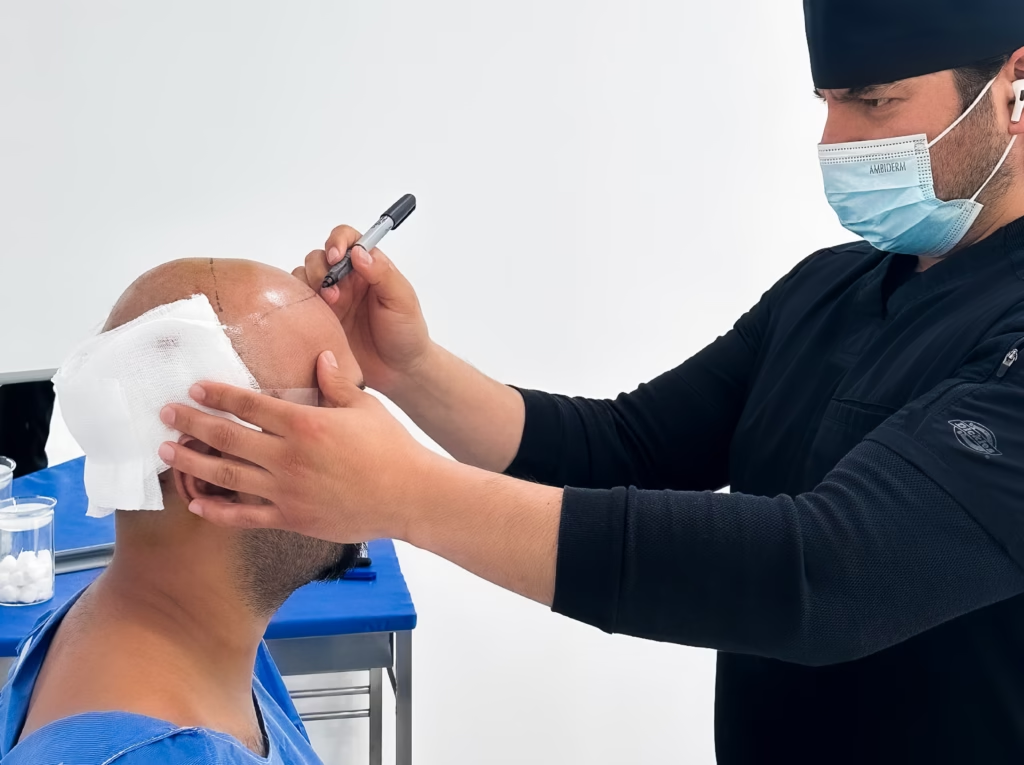
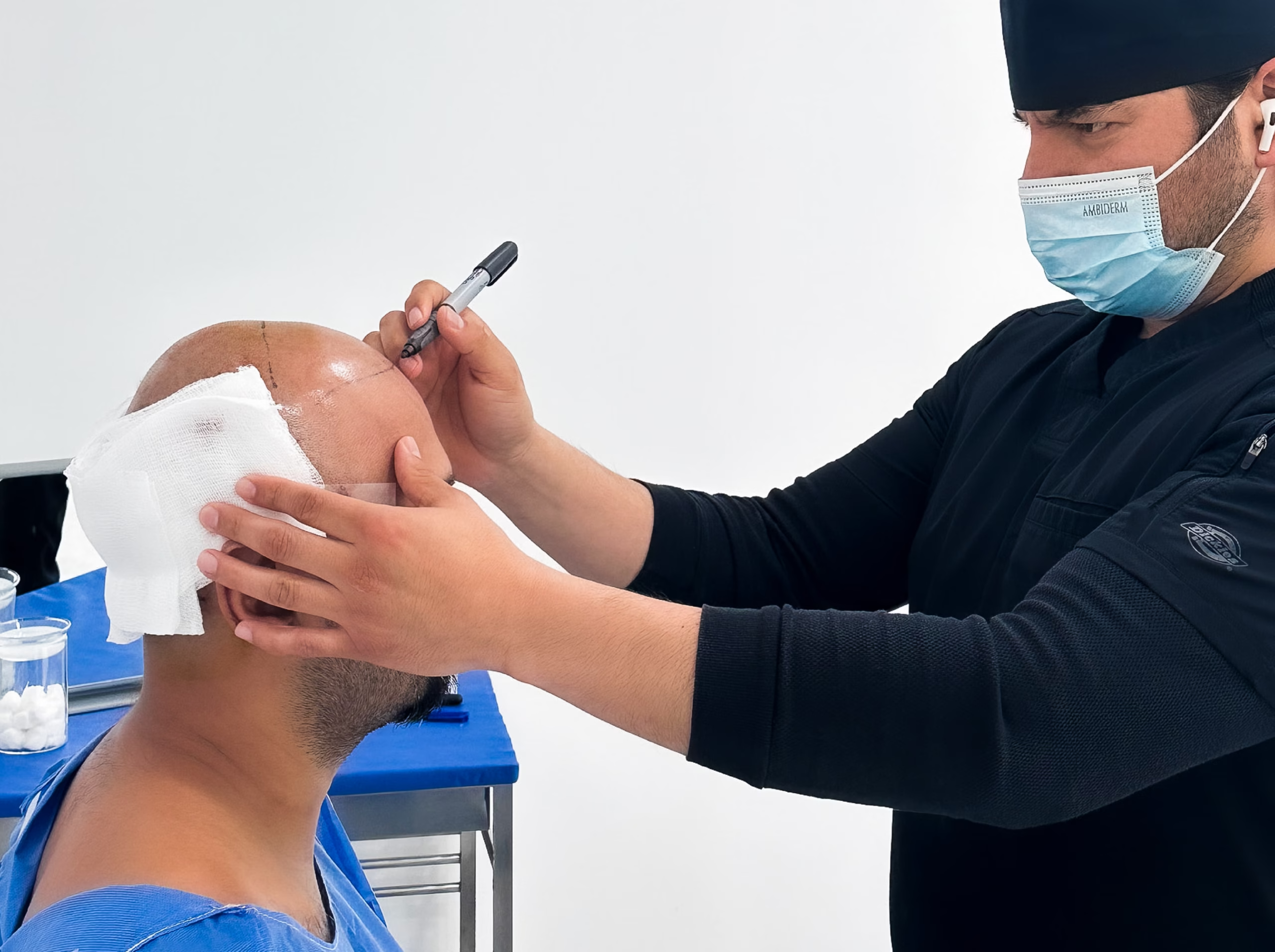
You’re looking in the mirror, imagining how you’ll look after your hair transplant. But here’s the thing: the success of your procedure depends heavily on one crucial element: your hairline design.
A well-designed hairline can transform your appearance and boost your confidence. A poorly designed one? That’s how people end up with that obvious “transplant look” we’ve all seen.
At Hair Medical Restoration, we believe informed patients get better results. So let’s walk through everything you need to know about hairline design before your hair transplant in Tijuana.
Your hairline is the frame of your face. It’s what people notice first when they look at you. A natural-looking hairline restoration should be undetectable—no one should be able to tell you’ve had work done.
But here’s what many patients don’t realize: your hairline hair transplant design needs to work for you not just today, but 10, 20, even 30 years from now. That’s why understanding the principles of good hairline design is essential before you commit to surgery.
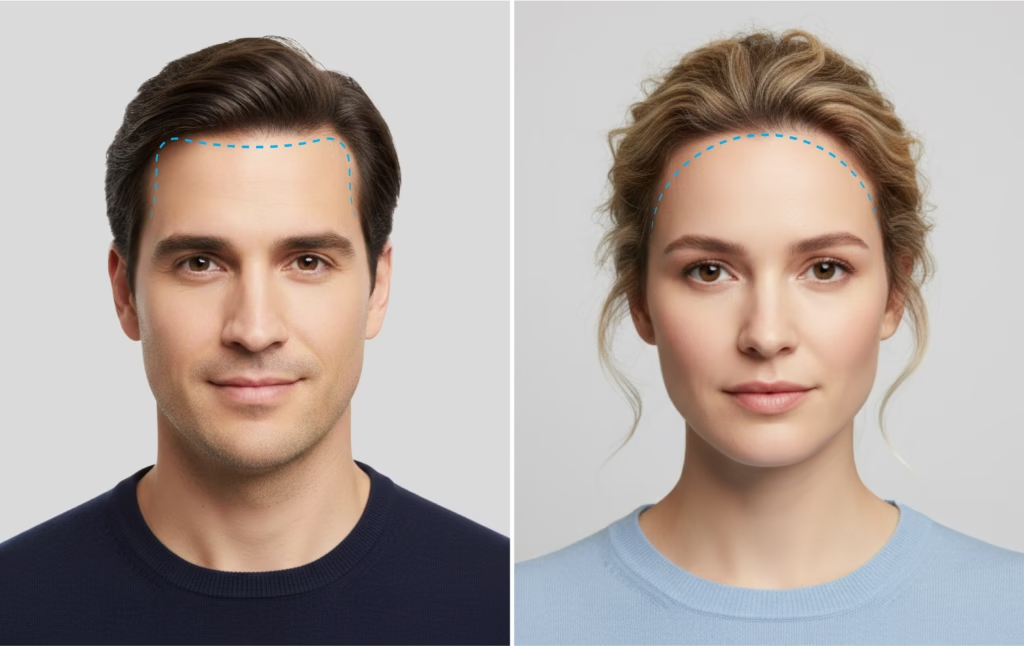
If you’re a man, your ideal hairline has specific characteristics that create a natural, age-appropriate look:
Shape and Position: Men naturally have an M-shaped hairline with some temple recession. This isn’t a flaw, it’s what makes a hairline look masculine. Your hairline should typically sit about 7-8 cm from where your eyebrows meet (the midglabella), creating that angular, defined look.
What makes it look natural: Those temple points and slight recession aren’t bugs, they’re features. A completely straight, low hairline on a man often looks unnatural and will seem increasingly odd as you age.
Age matters: A 45-year-old man should not have the same hairline as a 20-year-old. Your surgeon should design a hairline that looks right for your current age and will continue to look natural as you get older.
Women’s hairlines have different characteristics that create a softer, more rounded appearance:
Shape and Position: The feminine hairline is typically rounded with minimal temple recession. It sits slightly lower on the forehead, creating smoother, softer angles.
Key differences: Women’s hairlines have more consistent density across the front and those rounded temples that frame the face without the pronounced M-shape seen in men.
Why it matters: For women experiencing hair loss, maintaining these feminine characteristics is crucial. A hairline that’s too angular or has excessive temple recession can masculinize your appearance.
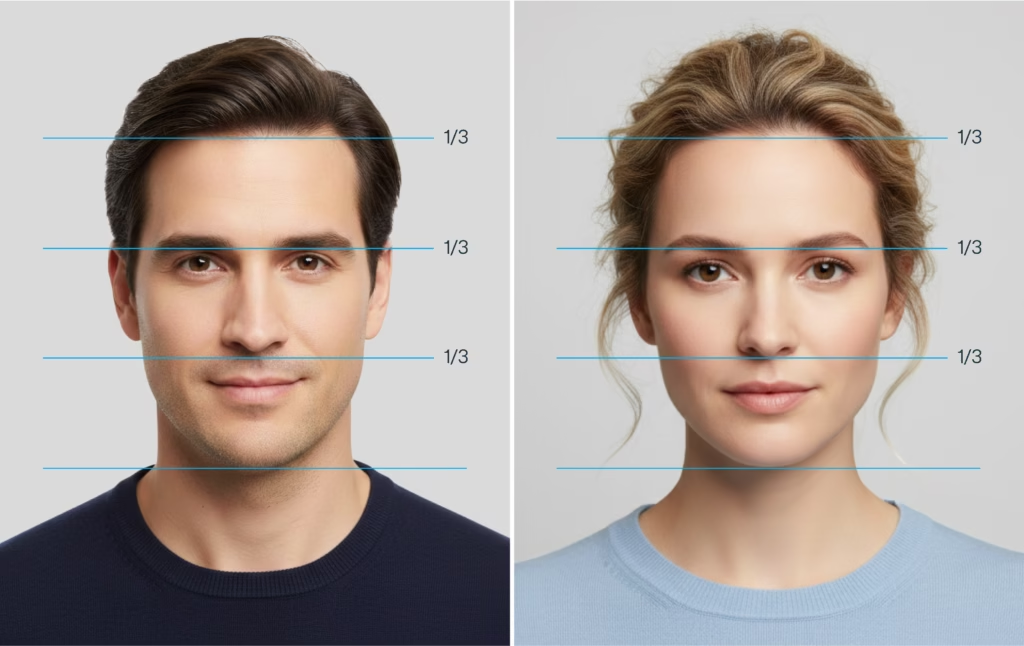
Both masculine and feminine hairlines should respect facial proportions. Your face should ideally divide into three equal parts: hairline to eyebrows, eyebrows to nose base, and nose base to chin. This creates natural harmony.
Before you even walk into your consultation, there’s work you should do. Prepared patients get better results because they can communicate effectively with their surgeon.
At Hair Medical Restoration: We ask for these specific photos before your virtual consultation to help our surgeons prepare a personalized hairline design plan for you.
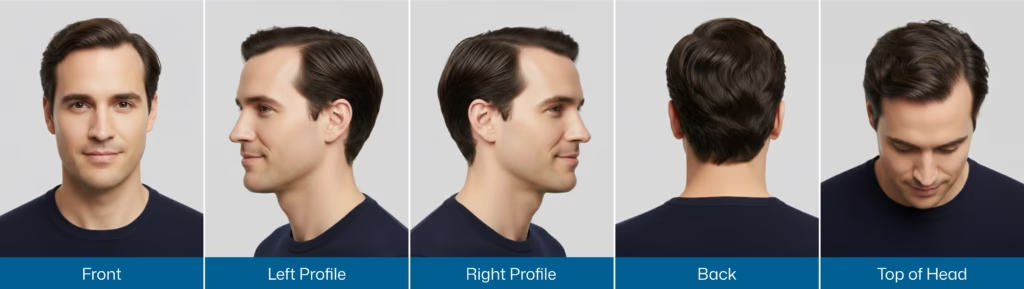
Why this matters: Your surgeon can design a hairline that respects your natural hair growth patterns and looks authentic to you.
Why this matters: Your hairline design must account for potential future hair loss. A surgeon who understands where you might lose more hair can design accordingly.
Important note: Understanding hair loss classifications can be complex – don’t stress if you find it confusing. What’s more important is being aware that these classification systems exist and that your surgeon will use them to plan your treatment. If you want to dive deeper, check out this comprehensive review: Classifications of Patterned Hair Loss: A Review. Your surgeon will properly assess your pattern during consultation.
Why this matters: Not all surgeons excel at the artistic aspects of hairline design. Some focus more on graft numbers than aesthetics.
Understand the difference between extraction techniques (FUE vs. FUT)
Why this matters: Your donor area is like a bank account—once you’ve spent it, it’s gone. When harvesting grafts from your donor area, extra care is essential. Once a follicle is extracted, it’s gone permanently—hair will no longer grow from that spot. How noticeable this is depends on factors like your hair thickness, natural donor density, and, most importantly, the number of grafts extracted. This is why overharvesting is such a serious risk: it can leave the donor area looking way thinner than it needs to be.
At Hair Medical Restoration: We specialize in FUE (Follicular Unit Extraction), the most advanced extraction technique, chosen because it leaves no linear scar, allows for faster recovery, and lets you wear your hair short without obvious marks. Most importantly, our surgeons are trained to extract grafts as strategically and conservatively as possible—always with the goal of making any change to your donor area as unnoticeable as possible.
Why this matters: Clear communication about your goals helps your surgeon create a design that matches your expectations.
Don’t just sit there and nod. Your consultation is your opportunity to assess both the surgeon’s skill and whether their approach aligns with your goals. Here’s what to ask (and what warning signs to watch for):
Question: “Why are you recommending this specific hairline height and shape for me?”
What you want to hear: A detailed explanation of how your facial features, age, and future hair loss patterns influenced their design.
Red Flag: The surgeon can’t articulate their reasoning, or suggests the same design they show everyone.
Question: “How will my age affect the hairline design?”
What you want to hear: Discussion of age-appropriate hairlines and how the design will look natural as you age.
Red Flag – The “Too Good to Be True” Hairline: A surgeon offers to create an extremely low, youthful hairline, especially if you’re over 40. Overly low hairlines look unnatural as you age and waste precious donor hair, increasing the price or taking away possible density from other areas.
Question: “What happens if I continue to lose hair after this procedure?”
What you want to hear: Explanation of how the design accounts for potential future loss and preserves donor hair for possible future procedures.
Red Flag – The Future-Blind Surgeon: Your surgeon doesn’t discuss future hair loss or doesn’t seem concerned about preserving donor hair. A hairline that isolates as surrounding hair falls out becomes an obvious, unnatural look.
Question: “Can I see examples of hairlines you’ve created for patients with similar features to mine?”
What you want to hear: Similar before-and-after examples with patients who have face shapes, hair types, and/or ages that are similar to your case.
Red Flag – The One-Size-Fits-All Approach: The surgeon doesn’t ask detailed questions about your goals, doesn’t examine your facial features carefully, or shows generic results. Perfect hairline design requires customization: template approaches produce cookie-cutter results.
At Hair Medical Restoration: We encourage all our patients to have a personalized hairline design consultation the day before surgery, where you’ll see your proposed hairline design and can provide input. Our doctors also verify the design again on the day of your procedure to ensure you’re completely satisfied.
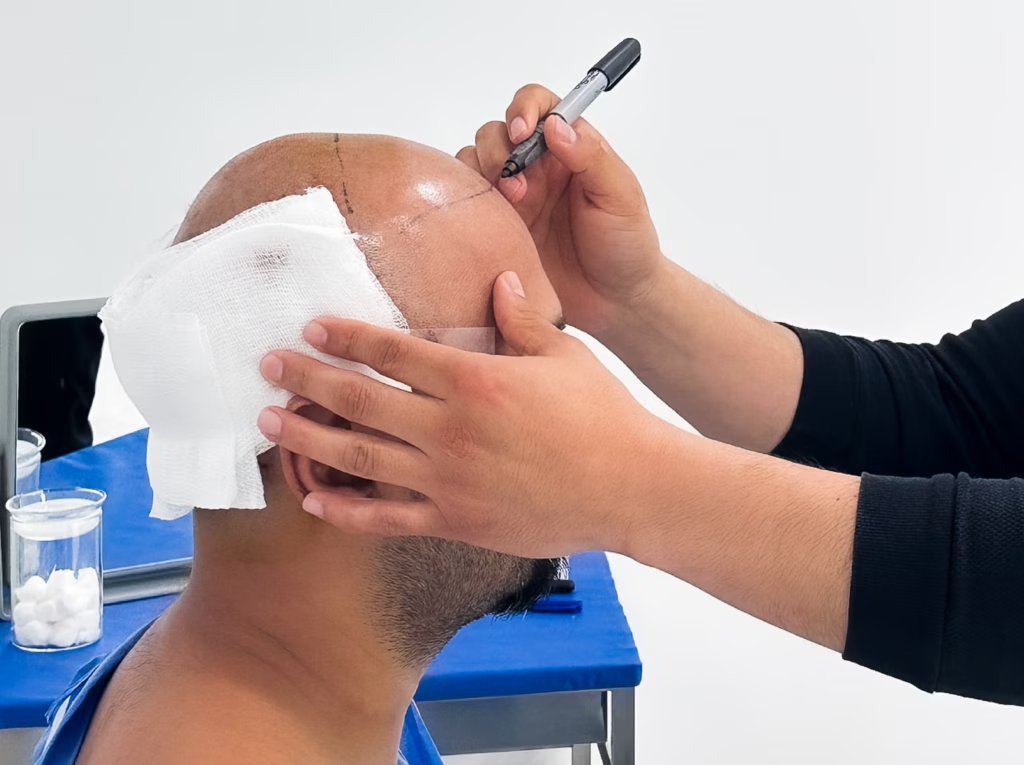
Ready to discuss your hairline design?
Our experienced team at Hair Medical Restoration in Tijuana can help you create a natural, age-appropriate hairline. Schedule a consultation
Your surgeon needs specific information to design the best hairline for you. Here’s what helps:
During your consultation, your surgeon should carefully evaluate:
Your facial features: Face shape, bone structure, forehead proportions, eyebrow position, and overall symmetry all influence hairline design.
Your hair characteristics: Hair thickness, texture, color contrast with your skin, natural growth direction, and any existing hairline remnants.
Your scalp: Donor area density and quality, scalp flexibility, any previous scarring, and your current hair loss pattern’s stability.
This comprehensive assessment is how skilled surgeons create customized designs rather than generic templates.
Let’s be honest about outcomes. Understanding realistic expectations protects you from disappointment.
A natural-looking hairline that frames your face and is virtually undetectable to others. A trained eye, however, should be able to tell you’ve had work done.
Permanent results in the transplanted area. Transplanted hair retains the characteristics of the donor area, which is typically resistant to hair loss.
Visible improvements that boost your confidence and allow you to style your hair normally.
Timeline: This is important to understand:
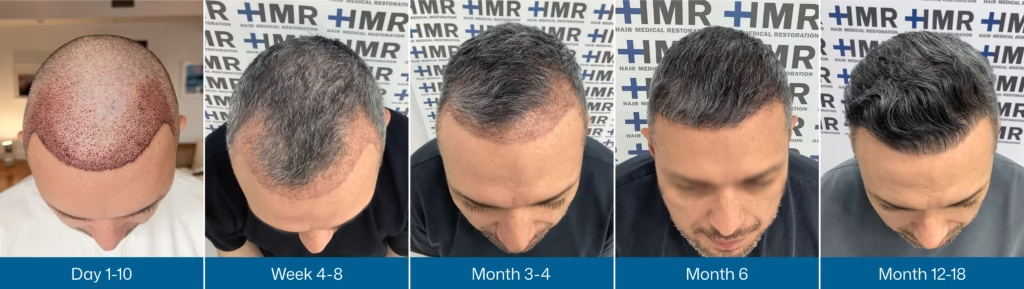
What You CAN’T Expect
Your teenage hairline back: Age-appropriate design is crucial. A 40-year-old shouldn’t have a 20-year-old’s hairline.
Maximum density: You’ll achieve good coverage (typically 30-40% of original density) but not the same density as your original hair. The good news? This is usually enough to look natural.
One-and-done for everyone: Many patients with extensive loss may need 2-3 sessions for optimal results.
A cure for ongoing hair loss: The transplanted hair is permanent, but surrounding native hair can still be lost over time. This is why medications like finasteride are often recommended.
Unlimited donor hair: Your donor area is finite. Overharvesting now limits your future options.
Your individual results will depend on:
A successful hairline transplant is:
✔️Practically undetectable: Most people shouldn’t be able to notice you had a procedure
✔️Soft and irregular: No hard lines or unnatural straightness
✔️Age-appropriate: Looks right for your current age
✔️Naturally graduated: Proper density transitions from front to back
✔️Correctly angled: Grafts follow natural growth patterns
✔️Seamlessly blended: Integrates with existing hair
✔️Natural from all angles: Looks good in person, photos, and video
✔️Aging-friendly: Will continue to look natural as you get older
At Hair Medical Restoration in Tijuana, we’re proud to support the International Society of Hair Restoration Surgery’s Fight the FIGHT campaign, which stands for Fight the Fraudulent, Illicit, and Global Hair Transplants.
This global awareness campaign addresses a serious problem in the hair restoration industry: black-market clinics where unlicensed technicians perform surgeries, often with devastating results including permanent scarring, infections, unnatural hairlines, and depleted donor areas.
Consequences of hair transplants performed illegally can include permanent visible scarring, infection, thin patches of hair, bald spots, and over-harvested donor areas that can be very difficult to correct. Some damage cannot be repaired at all.
That’s why choosing a qualified, ethical surgeon who follows best practices isn’t just about getting good results—it’s about protecting your health and your future options.
When you choose Hair Medical Restoration, you’re choosing a clinic that:
Your hairline design is where science meets art. The technical skill of the surgeon matters, but so does their artistic eye and their ability to customize the design to your unique features, age, and goals.
The best results come from partnership—an informed patient working with an experienced, ethical surgeon who takes the time to understand your needs and designs a hairline that will look natural for life.
At Hair Medical Restoration in Tijuana, we believe in transparency, realistic expectations, and designs that honor your individual features. We’re not here to give everyone the same hairline. We’re here to restore yours in a way that looks like you—just with more hair.
Now that you understand what goes into a well-designed hairline, you’re prepared for a meaningful consultation. Come with your questions, your photos, and your goals. Let’s design a hairline that’s perfect for you.
Schedule your consultation with Hair Medical Restoration today and let’s start your journey to a natural-looking, confidence-boosting hair restoration.
Have questions about hairline design or hair restoration? Contact us at Hair Medical Restoration. Our experienced team is here to guide you through every step of the process.
Take the first step with confidence.
Book your free video consultation with one of our expert doctors at Hair Medical Restoration and get expert advice, a personalized plan and clear answers, all tailored to you.
✅ Hair Medical Restoration is committed to delivering world-class care, personalized treatments, and natural results.
Your new hair starts here.