Reverse Pattern Baldness: What Really Works
Can pattern baldness be reversed? Learn what causes androgenic alopecia,…


Quick Summary: If you’re considering a hair transplant, one of the first questions you may ask is, “How many hair grafts do I need?” The answer depends on factors such as your hair loss stage, donor hair, desired hairline, and restoration goals. This guide explains how grafts are estimated and why a personalized medical evaluation is more accurate than an online hair graft calculator.
One of the most common questions people ask before considering a hair transplant is, “How many hair grafts do I need?” It’s also one of the most difficult questions to answer without a professional evaluation.
While online hair graft calculators can provide rough estimates, the actual number of grafts depends on factors like your pattern of hair loss, donor hair availability, hair characteristics, and long-term goals.
There isn’t a one-size-fits-all answer. Two patients with similar hair loss may require completely different numbers of grafts depending on their hair characteristics, density, donor area, and expectations.
In this guide, you’ll learn how surgeons estimate grafts, what the Norwood and Ludwig scales reveal about your hair loss, and why a personalized evaluation is the most accurate way to plan your treatment.
Before estimating how many grafts you need, it’s important to understand what a hair graft actually is.
A hair graft, also known as a follicular unit, is the naturally occurring group of hair follicles found in the scalp. Rather than growing individually, hair grows in small clusters that typically contain one to four hairs.
A follicular unit contains one to four hair follicles, along with supporting structures such as sebaceous glands, connective tissue, and the arrector pili muscle. Careful extraction, handling, storage, and implantation help protect the follicular tissue and support graft survival.
During a Follicular Unit Extraction (FUE) hair transplant, each follicular unit is carefully extracted from the donor area—usually the back or sides of the scalp—and implanted into thinning or bald areas while preserving its natural structure.
The donor area is one of the most important factors in determining how many grafts can safely be transplanted. Patients with a dense, healthy donor area often have more treatment options than those with limited donor hair.
One of the most common misconceptions about hair transplantation is that one graft equals one hair.
In reality, each hair graft—or follicular unit—can naturally contain one, two, three, or even four individual hairs. During an FUE procedure, surgeons carefully preserve these naturally occurring groupings when extracting and implanting grafts.
Because every graft is unique, surgeons measure a hair transplant by the number of grafts, not the total number of hairs transplanted.
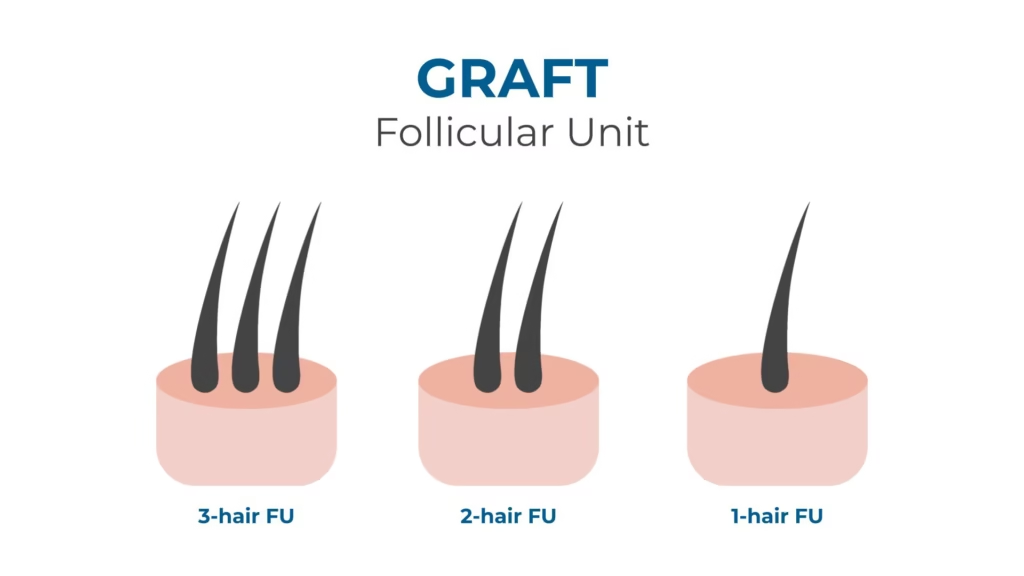
This is why two patients receiving the same number of grafts may not end up with the same number of hairs or achieve the same visual density. Factors such as hair caliber, curl, and donor quality also play an important role—which is why estimating the right number of grafts requires a personalized evaluation.
Estimating grafts involves much more than looking at the size of a bald area.
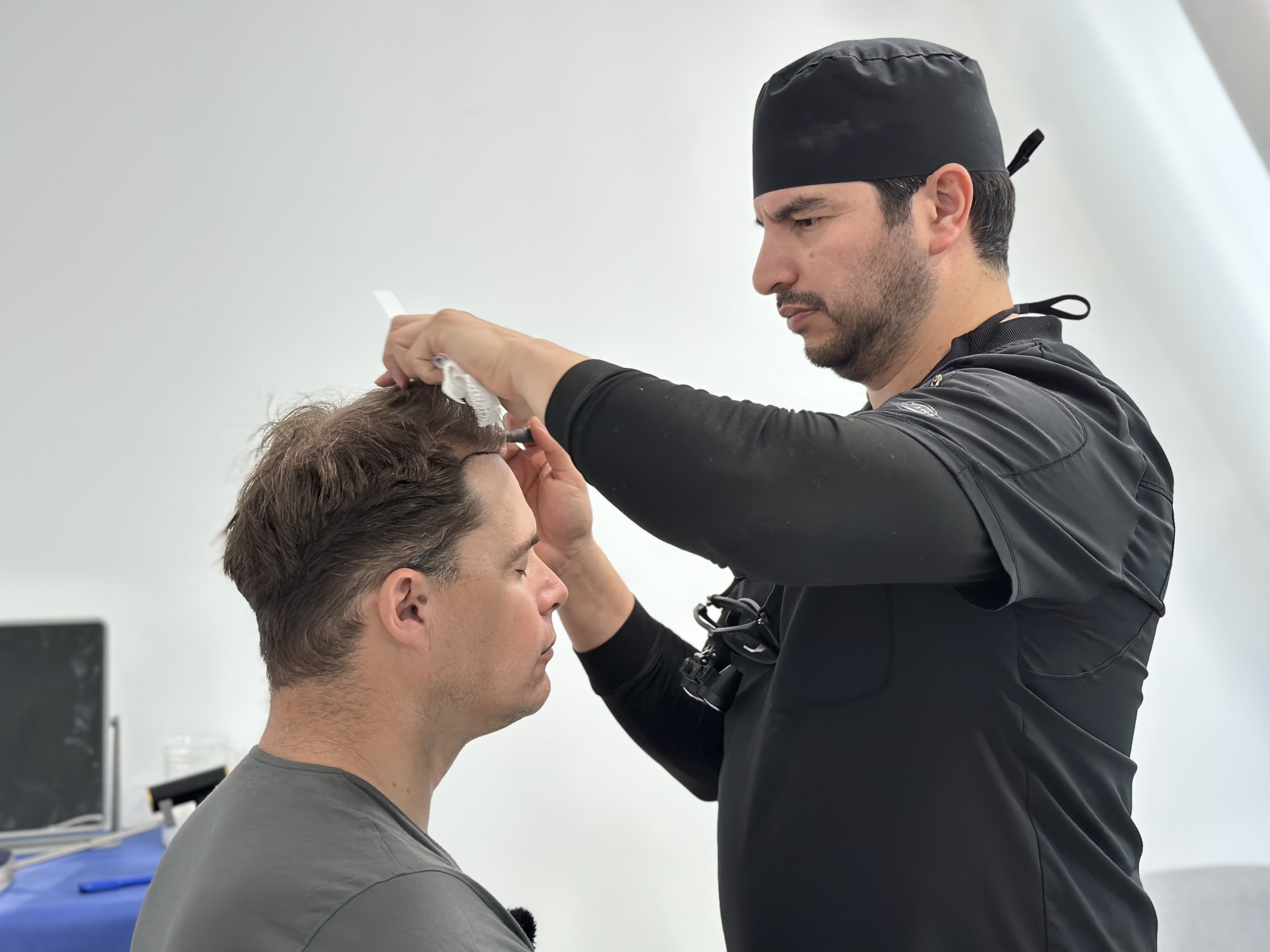
Hair restoration doctors consider multiple factors before recommending a treatment plan. Beyond the size of the affected area, they examine your stage of hair loss, review your donor area, and analyze your hair characteristics to create a personalized treatment plan.
They also take into account your desired hairline and the level of density you’re hoping to achieve, ensuring that the treatment plan is both natural-looking and sustainable over time.
For example, someone with thick, curly hair may require fewer grafts than someone with fine, straight hair to achieve the same visual density.
This personalized approach helps surgeons create natural-looking results while preserving donor hair for the future if additional procedures become necessary.
At Hair Medical Restoration, every case is personally reviewed by one of our surgeons to ensure each patient receives an accurate estimate based on their unique needs—not just an algorithm.
If you’ve been researching hair transplants online, you’ve probably come across a hair graft calculator. While these tools can provide a general estimate based on factors like your stage of hair loss and the areas you’d like to restore, they cannot account for the many variables that influence a successful hair transplant.
Every patient has unique hair characteristics, donor density, and restoration goals. A hair transplant doctor considers these factors, along with the likelihood of future hair loss, to determine the most appropriate graft count. As a result, two patients with similar hair loss may require completely different numbers of grafts to achieve natural-looking results.
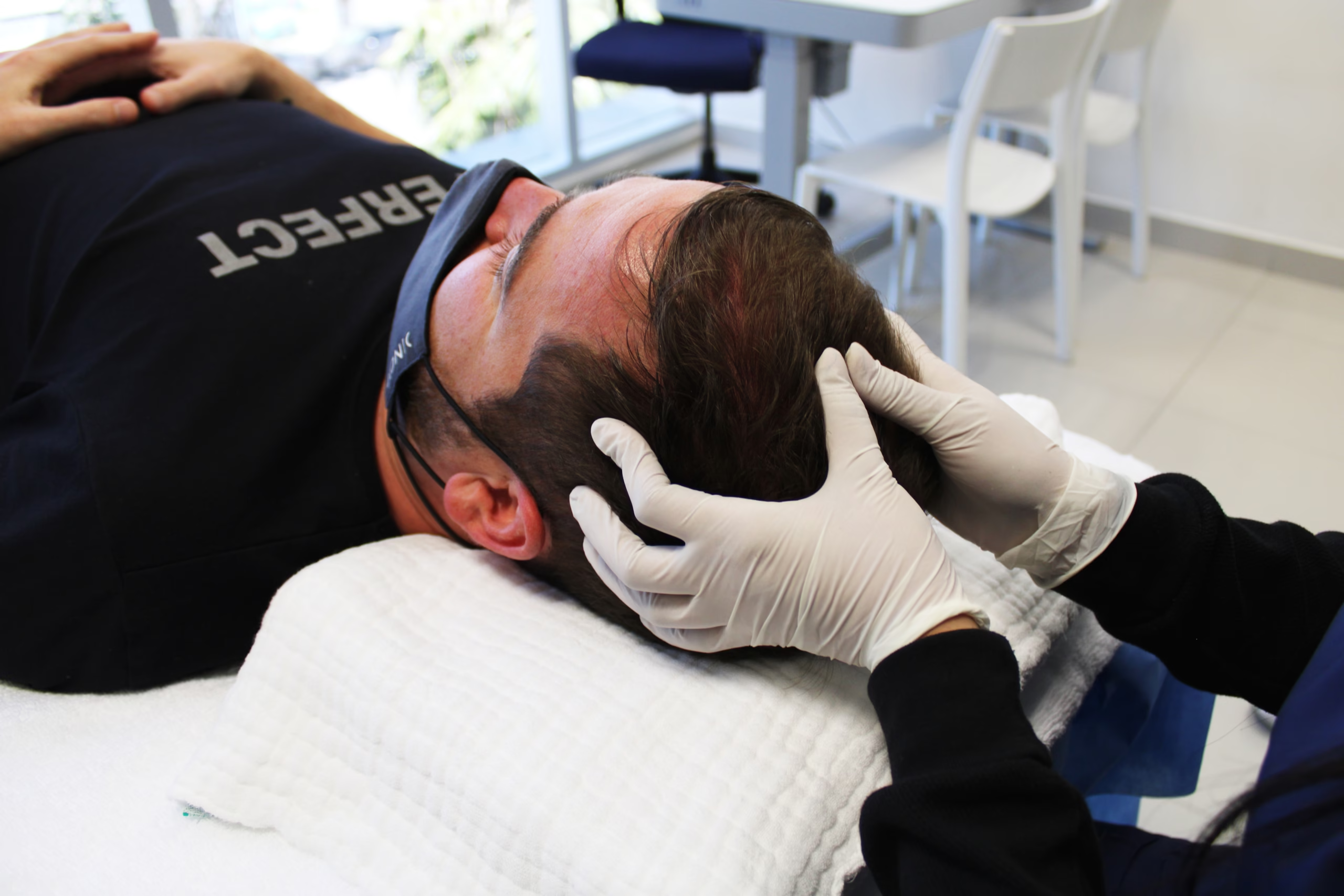
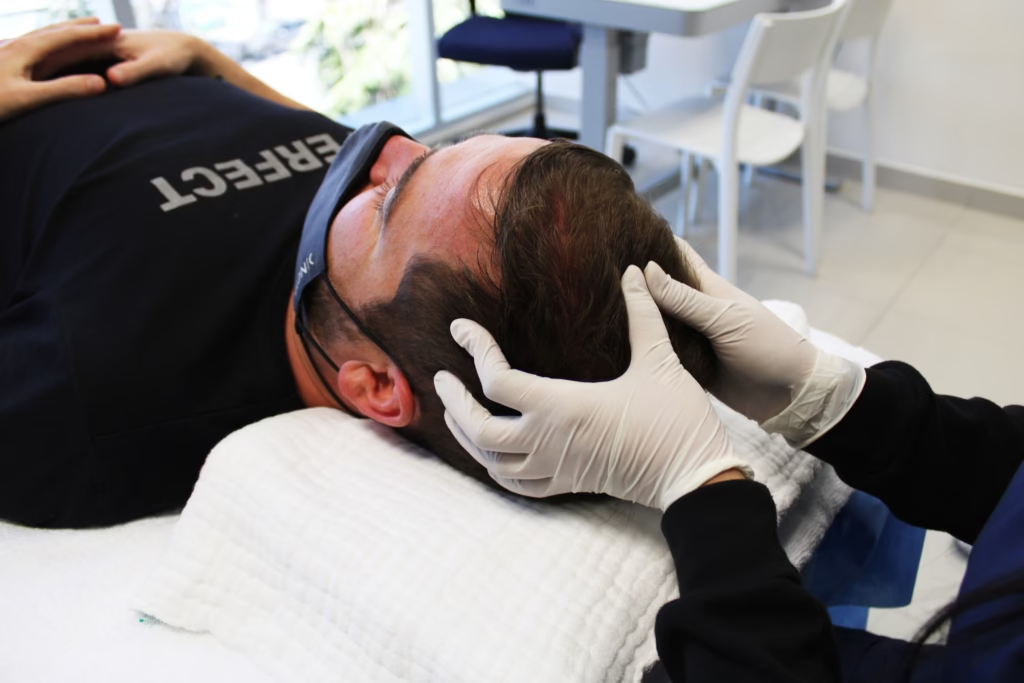
At Hair Medical Restoration, we go beyond what an online calculator can provide. Every virtual consultation is personally reviewed by one of our experienced surgeons, who evaluates your photos, donor area, and restoration goals to provide a preliminary treatment recommendation. The final evaluation and surgical plan are confirmed during an in-person consultation, where your scalp and donor area can be examined directly.
Think of a hair graft calculator as a helpful starting point—but not a final answer. The most accurate way to determine how many hair grafts you need is through a professional medical evaluation.
The Norwood Scale is the most widely used classification system for male pattern baldness (androgenetic alopecia). It helps hair transplant surgeons evaluate the progression of hair loss and estimate the number of grafts that may be needed to achieve natural-looking results.
Most men seeking a hair transplant fall somewhere between Norwood Stage II and Stage V. Understanding your stage helps surgeons estimate the number of grafts needed and develop a long-term treatment strategy.
While the exact graft count varies from patient to patient, the Norwood Scale provides a useful starting point for planning treatment.
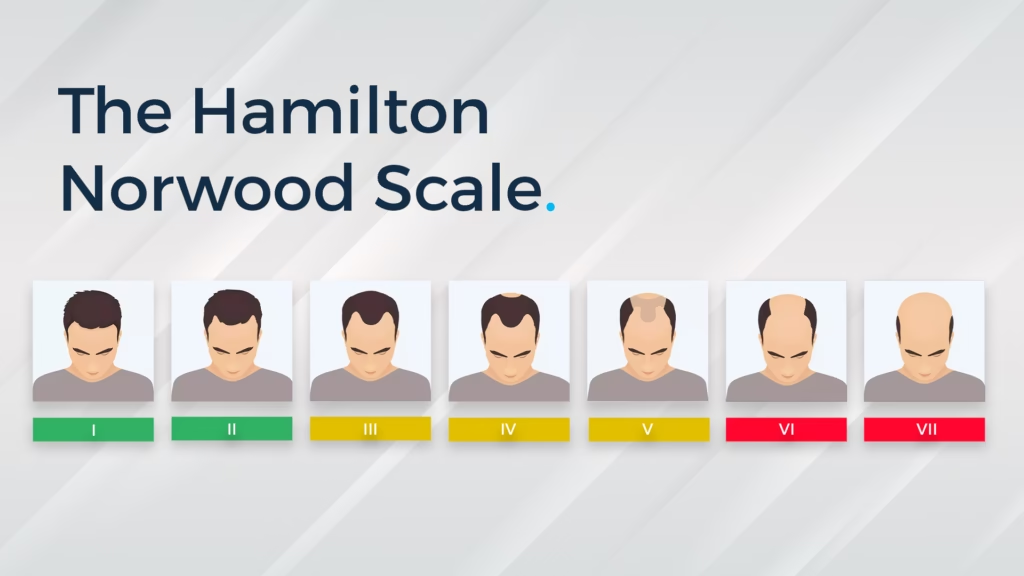
| Norwood Stage | Hair Loss Pattern | Estimated Grafts* |
| Stage I | Little to no noticeable hair loss. A hair transplant is usually not necessary. | Not typically recommended |
| Stage II | Mild recession at the temples with an early M-shaped hairline. | 800 – 1,500 |
| Stage III | More pronounced temple recession and a clearly defined M-shaped hairline. | 1,500 – 2,500 |
| Stage IV | Deeper recession with thinning or balding at the crown. | 2,500 – 3,500 |
| Stage V | The frontal and crown areas enlarge, leaving a thinner bridge of hair between them. | 3,500 – 4,500 |
| Stage VI | Extensive hair loss across the top of the scalp, with only the sides and back remaining dense. | 4,500 – 5,500 |
| Stage VII | The most advanced stage of male pattern hair loss, with extensive loss across the top of the scalp and a limited donor area. | 5,500+ |
*Important: These are general estimates. Your actual graft count will vary based on your individual characteristics and treatment goals.
Female hair loss progresses differently than male pattern baldness, which is why surgeons use a separate classification system to evaluate thinning and recommend treatment.
Unlike men, who often experience a receding hairline, women typically develop diffuse thinning across the top of the scalp while maintaining their frontal hairline. The Ludwig Scale is a three-stage classification system used to describe the progression of female pattern hair loss and help guide treatment planning.
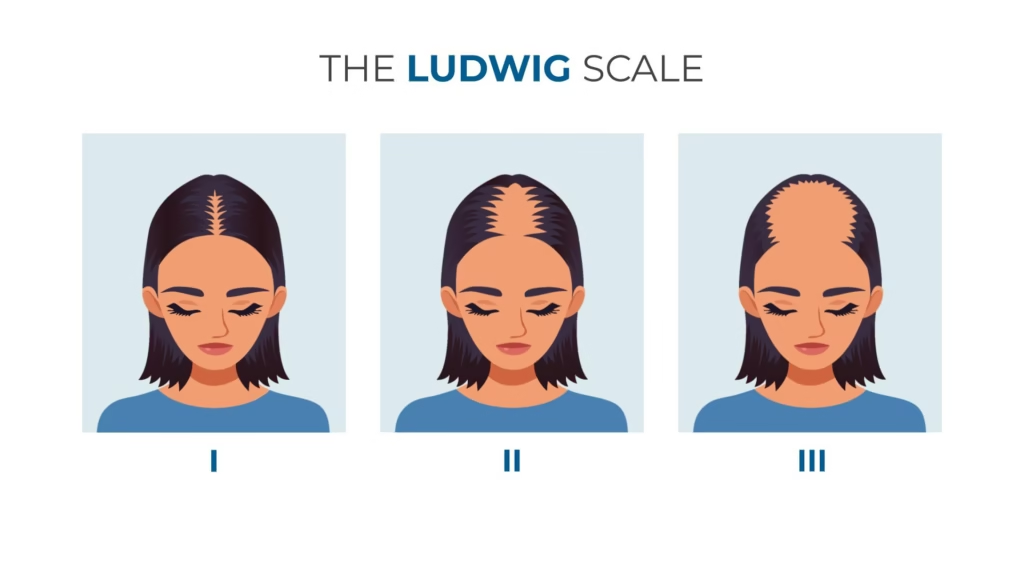
| Ludwig Stage | Hair Loss Pattern | Typical Treatment Considerations* |
| Stage I | Mild, noticeable thinning on the crown with a slightly widened central part. The frontal hairline is generally preserved. | Medical treatments may be recommended to help slow progression and improve hair density. |
| Stage II | More pronounced thinning across the crown with increased scalp visibility and a wider central part. | Depending on donor hair quality and the stability of hair loss, non-surgical treatments or hair restoration may be considered. |
| Stage III | Severe thinning or near-complete hair loss across the affected crown area, while the frontal hairline is generally maintained. | A personalized evaluation is essential to determine whether hair transplantation or a combination of restorative treatments may be appropriate. |
*Important: Every woman’s hair loss is unique. A personalized evaluation is the best way to determine the most appropriate treatment plan.
Yes.
High-quality photos and your medical history allow HMR’s medical team to provide a preliminary graft estimate and treatment recommendation remotely. Each case is reviewed by a physician, who considers your hair loss pattern, donor area, hair characteristics, medical history, and restoration goals.
Your photos and information are reviewed by HMR’s medical team—not an automated calculator or sales representative. You will receive a preliminary graft estimate, recommended treatment options, transparent pricing, and answers to your questions. However, the final graft count and surgical plan are confirmed during an in-person assessment of your scalp and donor area.
At HMR, your hair transplant procedure is performed by a doctor, and your post-operative care is managed by our medical team, providing medical oversight throughout your treatment.
Our goal is to help you make an informed decision with no pressure and no obligation.
The number of grafts you need depends on your stage of hair loss, donor hair availability, hair characteristics, and the level of density you’d like to achieve. While some patients require as few as 1,500 grafts, others may need 4,000 or more. The most accurate way to determine your graft count is through a personalized medical evaluation.
A single graft typically contains between one and four hairs, with an average of two hairs per follicular unit.
Yes. High-quality photos allow experienced hair restoration specialists to provide a reliable preliminary estimate before your in-person consultation.
Online hair graft calculators can provide a general estimate, but they don’t evaluate important factors such as donor density, hair caliber, future hair loss, or your restoration goals. At Hair Medical Restoration, every online evaluation is personally reviewed by one of our surgeons to provide a far more accurate graft estimate.
No. Two patients with the same stage of hair loss may require different graft counts depending on their hair characteristics, donor area, and restoration goals.
Every successful hair transplant begins with an accurate diagnosis.
Whether you’re just starting to notice thinning or have experienced years of hair loss, understanding how many grafts you need is the first step toward creating a treatment plan that looks natural and fits your goals.
At Hair Medical Restoration, we make the process simple, transparent, and completely personalized.
If you’re wondering how many hair grafts you need, the best answer comes from a personalized evaluation. Every patient has unique hair characteristics, donor availability, and restoration goals, which is why an individualized treatment plan is essential for achieving natural-looking results.
At Hair Medical Restoration, our experienced surgeons personally review every case to provide an accurate graft estimate and recommend the treatment options that best fit your needs.
Have questions about hair restoration in Tijuana, safety as a medical tourist, or the Baja California lifestyle? Contact Hair Medical Restoration. Our team is ready to help you make the best decision—for your hair, and maybe for everything else too.
Take the first step with confidence.
Book your free video consultation with one of our expert doctors at Hair Medical Restoration and get expert advice, a personalized plan and clear answers, all tailored to you.
✅ Hair Medical Restoration is committed to delivering world-class care, personalized treatments, and natural results.
Your new hair starts here.