Reverse Pattern Baldness: What Really Works
Can pattern baldness be reversed? Learn what causes androgenic alopecia,…


Quick Summary: Can pattern baldness be reversed? Learn what causes androgenic alopecia, how male pattern baldness progresses, which treatments can help preserve or regrow hair, and when a hair transplant may be the most effective solution.
Pattern baldness is one of the most common forms of hair loss. It is a progressive condition that typically develops gradually and follows a recognizable pattern.
In men, it is commonly known as male pattern baldness or androgenic alopecia. It often begins with a receding hairline, thinning at the temples, or reduced density around the crown. As the condition progresses, hair loss may become more noticeable across the top of the scalp.
The primary causes of pattern baldness are genetics and hormonal sensitivity. In people who are genetically predisposed to androgenic alopecia, certain hair follicles are more sensitive to dihydrotestosterone (DHT), a hormone produced from testosterone.
Over time, DHT can cause susceptible follicles to gradually miniaturize. The affected hairs may become thinner, shorter, and weaker until some follicles eventually stop producing visible hair.
Age can also make pattern baldness more noticeable, although the rate and progression of hair loss varies from person to person. Other factors, including stress, certain medications, hormonal changes, medical conditions, and nutritional deficiencies, can also contribute to hair loss or make it appear worse.
However, not all hair loss is caused by pattern baldness. Different conditions can have different causes and require different treatments, which is why identifying the cause of your hair loss is an important first step before choosing a treatment plan.
The answer depends on the stage of hair loss and the condition of the affected hair follicles.
For some patients, treatment can help slow the progression of hair loss, stabilize existing hair, and improve the appearance of thinning areas. This is particularly possible when treatment begins while the follicles are still active but producing thinner or weaker hair.
However, advanced hair loss may be more difficult to reverse.
When a hair follicle has undergone significant miniaturization or is no longer producing visible hair, medications and non-surgical treatments may not be able to fully restore the area.
The earlier pattern baldness is identified, the more treatment options may be available.
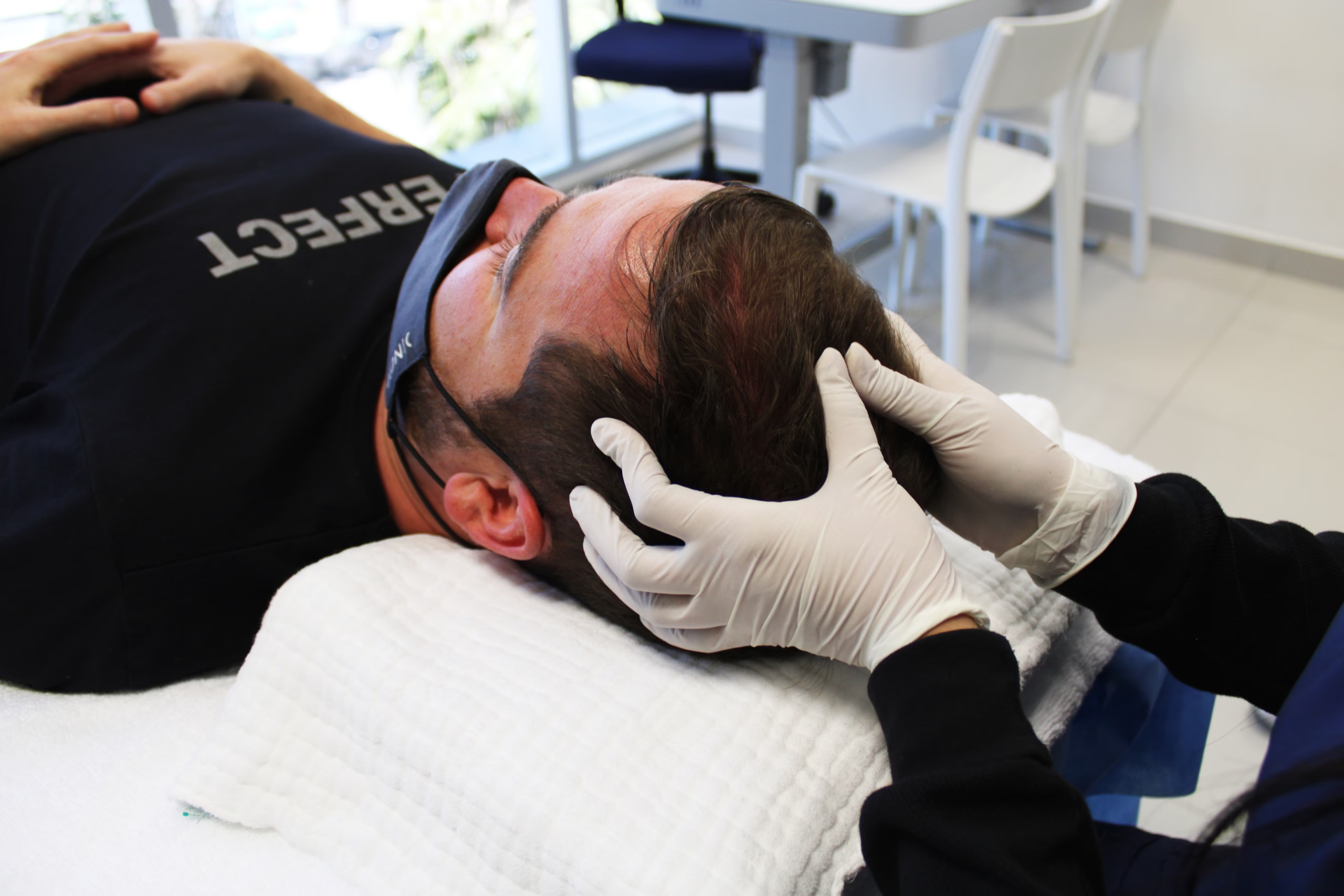
A personalized assessment can help determine whether your hair follicles may still respond to medical treatment or whether a hair transplant may be a more appropriate solution for areas where hair growth has been permanently lost.
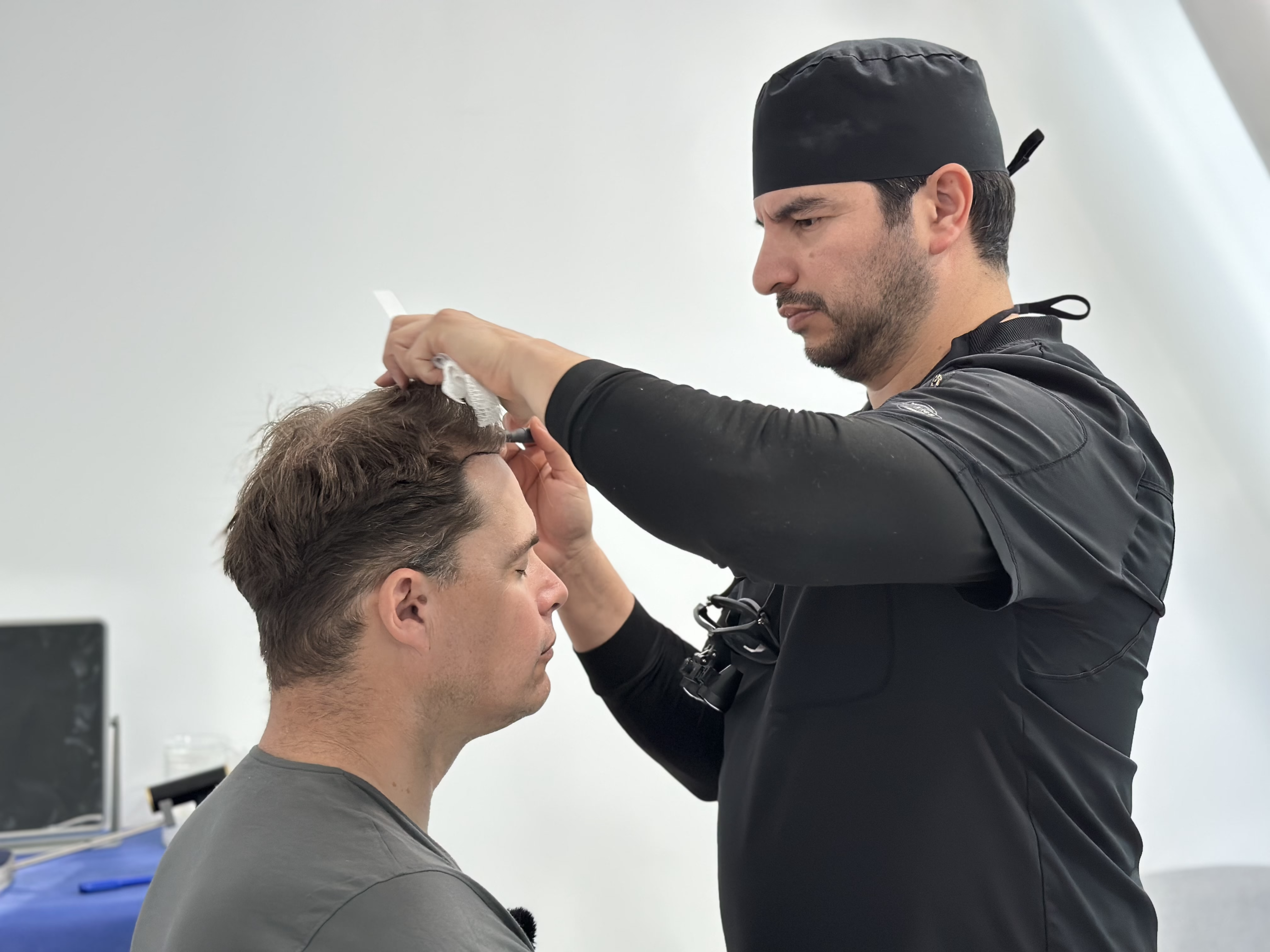
At Hair Medical Restoration, each patient’s hair loss pattern, donor area, and restoration goals are evaluated individually to help determine the most appropriate treatment approach.
There is no single treatment that works for every person with pattern baldness. The most appropriate option depends on several factors, including the cause and progression of hair loss, the condition of the hair follicles, medical history, donor hair availability, and long-term restoration goals.
Some treatments are designed to help preserve existing hair, while others may support the health of the scalp and hair follicles. In cases where hair has been permanently lost, a hair transplant may be considered to restore areas where follicles are no longer producing visible growth.
Medications such as minoxidil and finasteride are among the most commonly used treatments for hereditary hair loss.
Minoxidil may help stimulate hair growth and slow the progression of hair loss in some patients, particularly when the follicles are still active but producing thinner or weaker hairs. Results can take time, and continued use may be necessary to maintain the benefits.
Finasteride is a prescription medication commonly used to treat male pattern baldness. It works by reducing the conversion of testosterone into DHT. For some patients, it may help slow hair loss and improve the appearance of thinning hair.
Other medications, such as dutasteride, may also be considered depending on the patient’s medical history and individual needs. All prescription medications should be used under appropriate medical supervision.
Regenerative treatments such as PRP therapy, medical mesotherapy, and exosome therapy may be used as part of a broader treatment plan designed to support existing hair follicles and scalp health.
Platelet-Rich Plasma (PRP) uses components of the patient’s own blood, including concentrated platelets and growth factors, which are applied to the scalp. Medical mesotherapy involves the targeted delivery of selected substances into the scalp, while exosome-based treatments are an emerging area of regenerative medicine and hair restoration.
These treatments may be most relevant when viable hair follicles are still present. Their suitability depends on each patient’s individual condition and should be determined following a medical evaluation.
For some patients, combining treatments may provide a more comprehensive approach to managing pattern baldness. For example, medication may be used to help maintain existing hair while PRP or another treatment supports the health of the scalp and follicles.
In other cases, medical treatment may be combined with a hair transplant to improve the density of existing hair while restoring areas where follicles are no longer producing visible growth.
The most appropriate treatment plan depends on the individual patient, which is why a personalized evaluation is an important step before deciding how to treat pattern baldness
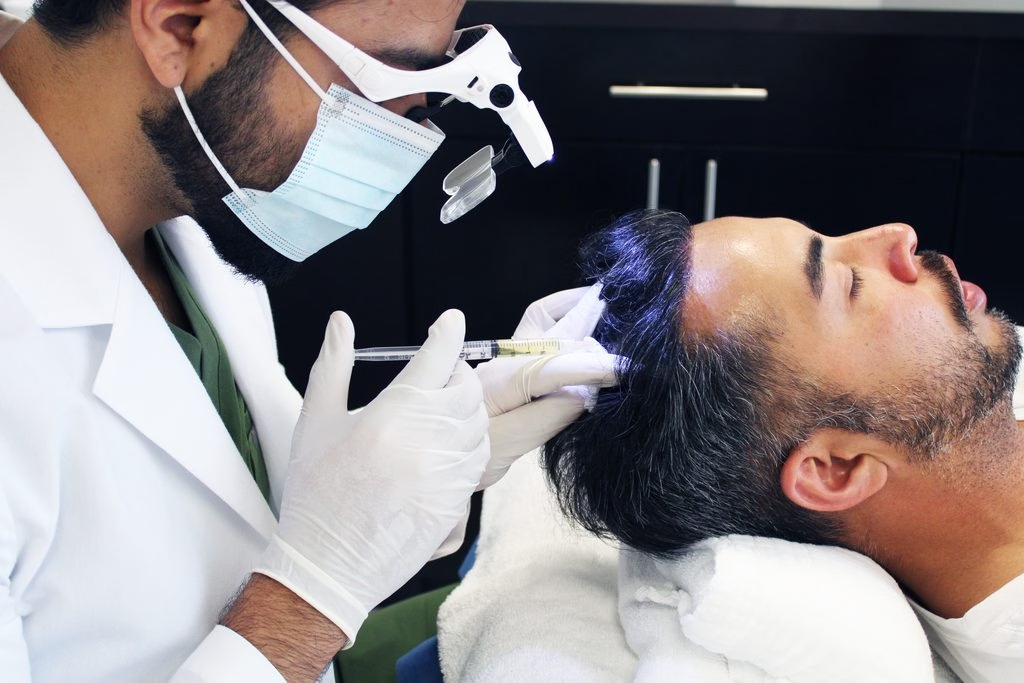
Medical treatments and non-surgical therapies can help preserve existing hair and, in some cases, improve the appearance of thinning areas. However, these treatments cannot always restore hair in areas where follicles are no longer producing visible growth.
This is where a hair transplant may become an appropriate option.
During a hair transplant, healthy hair follicles are taken from a donor area—typically the sides or back of the scalp—and transplanted into areas affected by hair loss. At Hair Medical Restoration, we use both FUE extraction and DHI implantation to carefully relocate healthy follicles to areas affected by hereditary hair loss.
One of the main differences between a hair transplant and medications or supportive treatments is that a transplant physically relocates healthy hair follicles from a donor area to areas affected by hair loss. When properly planned and performed, transplanted follicles can provide long-term growth in the treated areas.
However, not everyone is an ideal candidate for surgery. A proper evaluation is necessary to assess the density and quality of the donor hair, the progression of hair loss, hair characteristics, scalp condition, age, and long-term restoration goals. The amount of coverage that can realistically be achieved must also be carefully considered.
A hair transplant is not simply about moving as many grafts as possible. The procedure must be planned carefully to create natural-looking results while managing the patient’s available donor hair for the future. At Hair Medical Restoration, each treatment plan is designed around the patient’s individual pattern of hair loss, available donor area, and restoration goals.
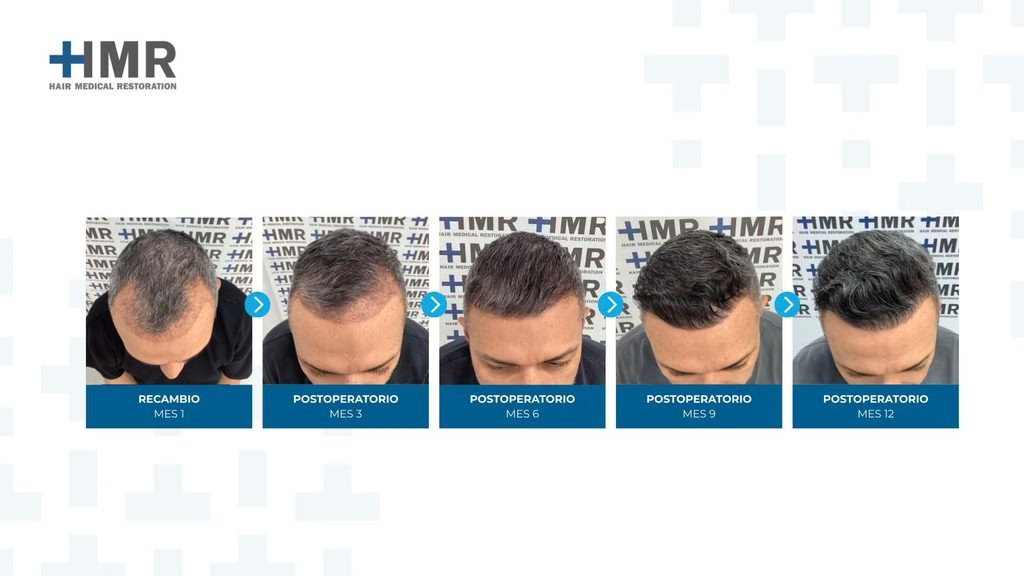
When people search for ways to reverse pattern baldness, they often hope to find one treatment that can completely restore all lost hair. In reality, the most effective approach depends on how advanced the hair loss is and whether the affected follicles are still active.
For patients in the earlier stages of androgenic alopecia, medical treatments may help slow hair loss and preserve existing hair. Treatments such as minoxidil, finasteride, PRP and other therapies may be used to support follicle health and improve the appearance of thinning areas.
When hair loss has progressed and certain follicles are no longer producing visible hair, non-surgical treatments may not be enough to restore the lost density. In these cases, a hair transplant may be considered to restore hair in areas affected by permanent hair loss.
The key is to identify the right treatment for the right stage of hair loss. A personalized assessment can help determine whether your goal should be preserving existing hair, improving density, restoring lost areas, or combining multiple treatment approaches.
Male pattern baldness may be slowed, stabilized, or partially improved depending on the stage of hair loss and the condition of the hair follicles.
However, advanced hair loss may require a hair transplant to restore hair in areas where follicles are no longer producing visible growth.
The best treatment depends on the cause and progression of your hair loss.
Medications such as minoxidil and finasteride may help preserve existing hair, while treatments such as PRP, medical mesotherapy and other therapies may support hair follicle health.
For more advanced hair loss, a hair transplant may provide a long-term solution for restoring hair in areas with significant loss.
Minoxidil can help slow hair loss and stimulate hair growth in some patients, especially when the hair follicles are still active.
However, results vary from person to person, and continued use may be necessary to maintain its benefits.
In areas where the follicles have significantly miniaturized or no longer produce visible hair, minoxidil may not restore hair growth.
A hair transplant may be considered when hair loss has created areas where hair follicles are no longer producing visible growth and non-surgical treatments alone are not providing the desired coverage.
A patient must also have sufficient donor hair and be considered an appropriate candidate after a medical evaluation.
Androgenic alopecia, also commonly referred to as androgenetic alopecia, is a common form of hair loss associated with genetic factors and sensitivity to androgen hormones.
In men, it is commonly known as male pattern baldness and typically causes gradual recession of the hairline, thinning at the crown, or progressive hair loss across the top of the scalp.
In most cases, the terms are used to describe the same general type of hereditary hair loss. In men, androgenic or androgenetic alopecia is commonly referred to as male pattern baldness.
However, not all hair loss is caused by androgenic alopecia. A medical assessment can help determine the actual cause of hair loss.
Every case of pattern baldness is different.
The best treatment for one patient may not be the best treatment for another. Your hair loss pattern, follicle health, donor area, medical history, and restoration goals all play an important role in determining the most appropriate treatment.
At Hair Medical Restoration, our team is here to help you understand your options with personalized guidance, medical expertise, and a patient-centered approach.
Submit your information today to begin your personalized hair restoration assessment.
If you are experiencing pattern baldness, finding the right treatment starts with understanding what is happening to your hair.
Some patients may benefit from medical treatments designed to help preserve existing hair. Others may benefit from regenerative or non-surgical therapies. For patients with more advanced hair loss, a hair transplant may offer the opportunity to restore hair in areas where follicles are no longer producing visible growth.
There is no single solution that works for everyone.
At Hair Medical Restoration, our experienced medical team evaluates each patient’s unique situation to help determine which options may be appropriate. From your first assessment through treatment and follow-up, our goal is to provide honest guidance and personalized care throughout your hair restoration journey.
Have questions about male pattern baldness, androgenic alopecia, hair loss treatments, or whether you may be a candidate for a hair transplant? Contact Hair Medical Restoration today. Start your journey toward a treatment plan designed around your needs, your goals, and your long-term results.
Take the first step with confidence.
Book your free video consultation with one of our expert doctors at Hair Medical Restoration and get expert advice, a personalized plan and clear answers, all tailored to you.
✅ Hair Medical Restoration is committed to delivering world-class care, personalized treatments, and natural results.
Your new hair starts here.